Confidential / White-label / AI / Computer vision
AI Vision for Eyewear Fitting.
Personalised eyewear discovery.
Powered by visual analysis.
An anonymised white-label project combining facial image analysis, frame selection support and a structured questionnaire for lens preferences.
Explore the product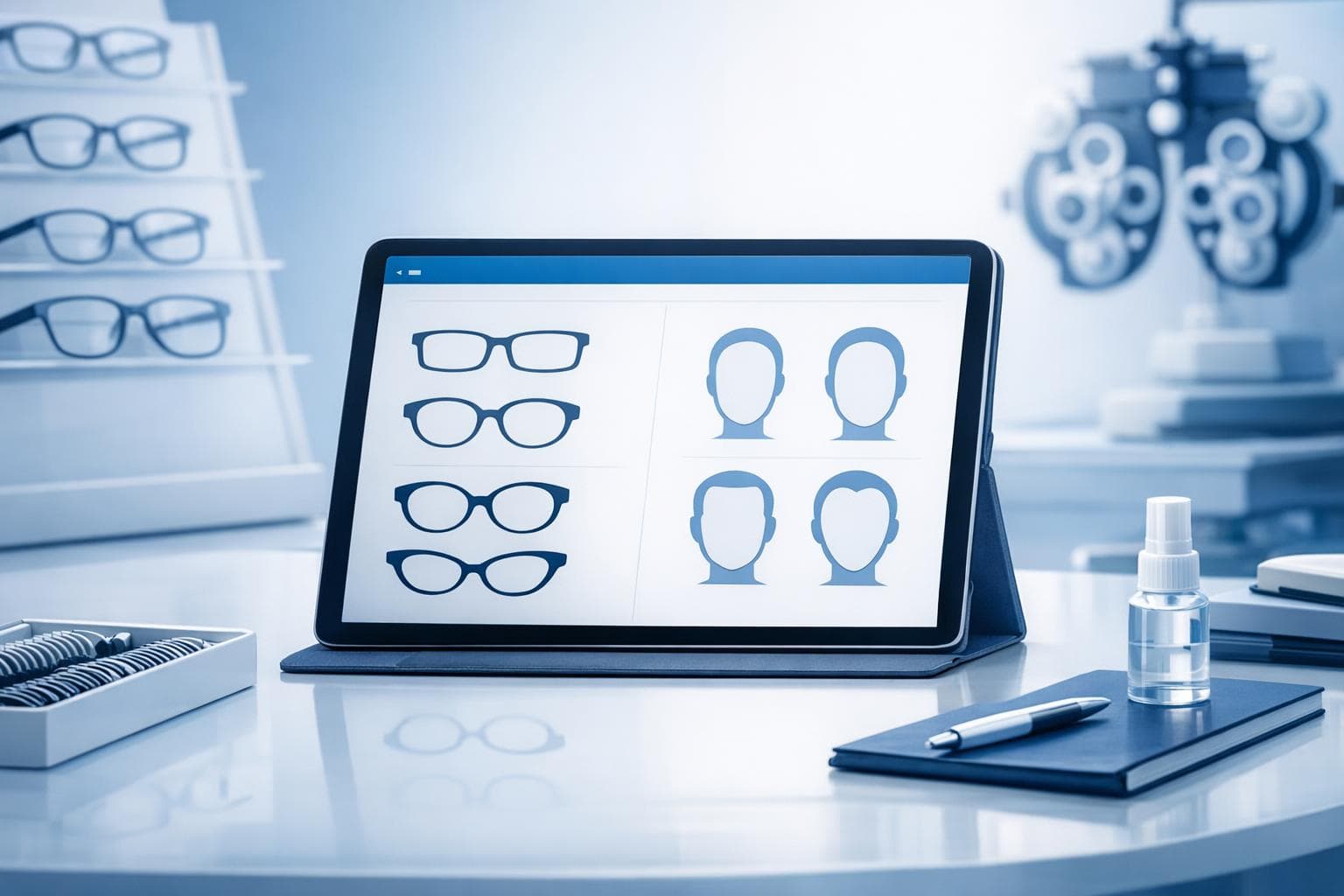
- Client
- Confidential · NDA
- Sector
- Eyewear & optical retail
- Product
- White-label software
- Focus
- AI & computer vision
Helping users explore eyewear options through a personalised digital experience.
This white-label project explored the use of artificial intelligence and computer vision in eyewear and lens fitting.
The product was designed to help users identify eyewear frames that may be suitable for their facial features. The experience combined facial photography with a structured questionnaire for lens-related preferences and requirements.
The solution was developed as a white-label product, allowing the underlying concept and functionality to be adapted for a client’s brand, user experience and commercial model.
The product combined facial image analysis and user-provided information to support a more personalised eyewear selection experience.
User experience
The proposed user journey was designed to be simple and accessible. A user could provide a facial photograph and answer a short questionnaire before receiving a recommendation-oriented result.
Facial photograph
The user provides an image of their face for the AI-supported eyewear fitting process.
Frame selection
The system analyses selected visual characteristics to support the identification of potentially suitable eyewear frames.
Lens questionnaire
A structured questionnaire collects user requirements and preferences relevant to lens selection.
Personalised result
The output is presented as a recommendation-oriented result adapted to the available user information.
Product solution
The solution was intended to connect AI-supported image analysis with a guided digital fitting process.
Instead of asking users to rely only on general product categories, the experience was designed to introduce personal context into the selection process.
The core product areas included:
Capturing or uploading a facial photograph.
Analysing selected visual characteristics.
Supporting frame recommendations.
Collecting lens-related requirements through a questionnaire.
Presenting personalised, recommendation-oriented results.
Creating a foundation for integration with an eyewear catalogue or retail platform.
Business context
Choosing eyewear online can be difficult because users cannot always assess how a frame may look or feel before making a purchase.
A personalised fitting tool can help reduce friction by providing a more guided way to explore available products.
For eyewear retailers and optical brands, this type of solution can support digital customer journeys, catalogue discovery and recommendation-led commerce.
White-label development model
The project was developed as a white-label solution. This means that the product concept can be adapted to the visual identity, catalogue, customer journey and commercial requirements of a specific brand.
Possible adaptation areas may include:
Brand identity and visual design.
Eyewear catalogue integration.
Product recommendation rules.
Questionnaire structure.
Customer account functionality.
Retailer and optical-store workflows.
Analytics and conversion tracking.
Integration with e-commerce platforms.
Technology direction
The project used the concept of AI-supported image analysis and computer vision for an eyewear fitting experience.
The exact models, datasets, image-processing pipeline, infrastructure, APIs and implementation details are not disclosed because the project was delivered under NDA.
AI
AI-assisted visual analysis
Computer vision
Facial image processing
User input
Structured lens and preference questionnaire
Recommendations
Personalised eyewear selection support
Product model
White-label software solution
Integration potential
Catalogue and e-commerce services
Potential business value
The product can help eyewear companies create a more engaging digital selection process and guide users towards products that may be relevant to their individual characteristics and preferences.
For online retailers, a recommendation-oriented experience can support product discovery and reduce the complexity of browsing a large eyewear catalogue.
The white-label model also makes it possible to adapt the solution for different optical brands, retailers and customer journeys without rebuilding the entire product concept from the beginning.
Project characteristics
White-label AI software product.
Computer vision and facial image analysis.
AI-supported eyewear frame selection.
Questionnaire-based lens fitting.
Personalised recommendation experience.
Potential catalogue and e-commerce integrations.
Client identity and internal details protected by NDA.
Project status and disclosure
This case study is intentionally presented in an anonymised format. The client name, product brand, original interface screens, model configuration, datasets and detailed architecture are not disclosed.
The published description focuses on the general product direction, user experience and development capabilities relevant to similar white-label AI solutions.
Project visual
A guided eyewear selection experience.
Only conceptual artwork is shown. The client identity, original interface, datasets and implementation details remain confidential. Select an image to view the full-size artwork in a new tab.
01 / Conceptual illustration
Exploring lens preferences
A supplied conceptual illustration of a lens-related digital experience. It is not an original product screen, a clinical simulation or a claim about measured optical performance.

Planning a white-label AI product?
Let’s explore your user journey, visual analysis and integration requirements.