Mobility / IoT / Sharing
Eco-Go.
Shared electric mobility.
Connected from app to scooter.
An electric scooter-sharing startup combining mobile applications, replaceable batteries and charging infrastructure.
Explore the product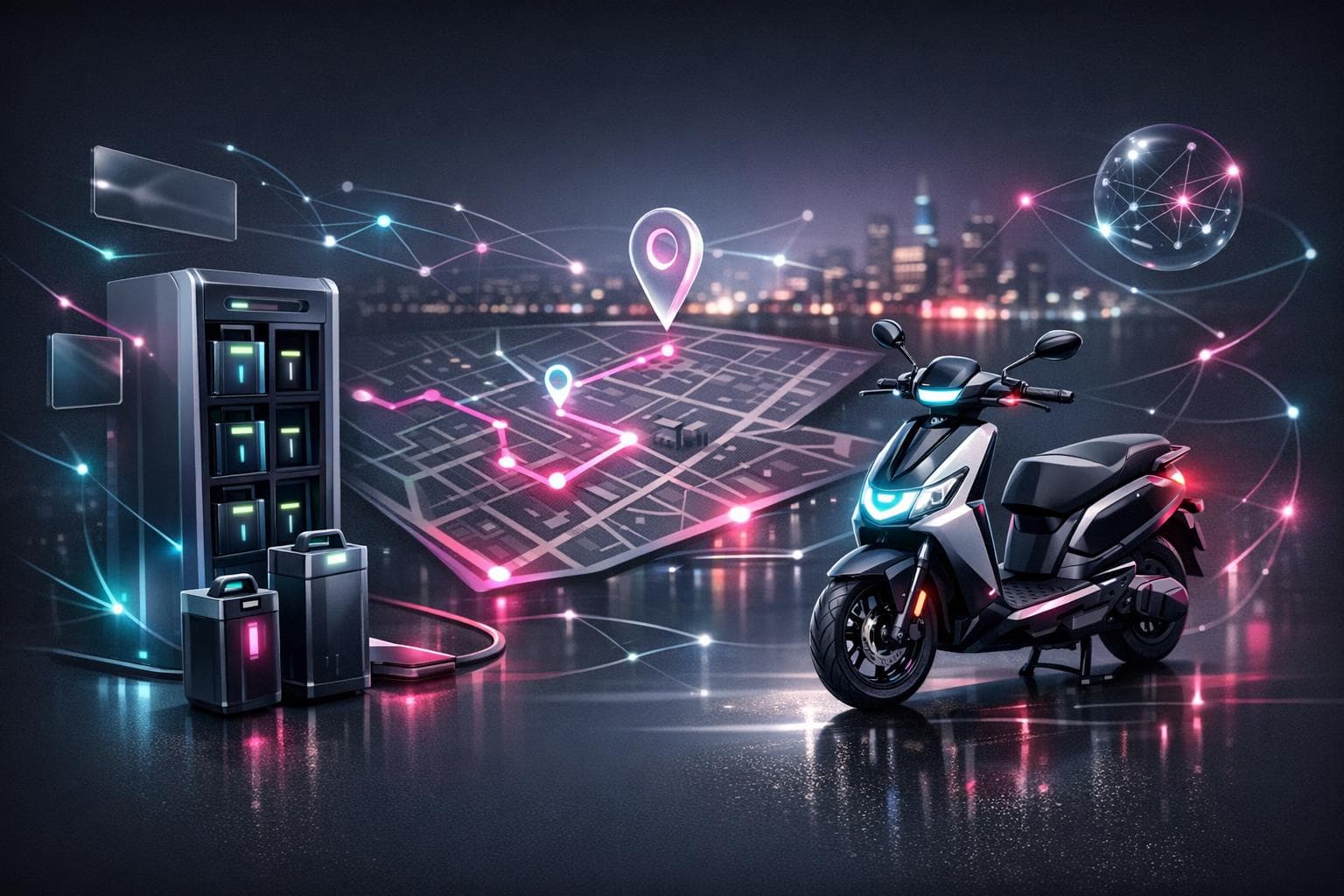
- Client
- Eco-Go
- Sector
- Mobility & IoT
- Platforms
- iOS, Android & web
- Scope
- Full-cycle development
Digital infrastructure for shared electric mobility.
Eco-Go is a mobility startup focused on scooter sharing in urban environments. The product concept combines electric scooters, replaceable batteries and dedicated charging infrastructure with mobile applications and supporting software components.
The project belongs to the connected-mobility and IoT space. It required a digital product capable of connecting the user-facing mobile experience with the operational aspects of a scooter-sharing service.
Eco-Go was developed as a multi-platform product, including iOS and Android applications together with frontend and backend components.
Eco-Go combines shared electric transport, mobile access and connected charging infrastructure in one mobility product.
Business context
Scooter-sharing services depend on more than the physical vehicles themselves. Users need a convenient way to access the service, while operators need software to support the wider mobility ecosystem.
This ecosystem may include mobile applications, digital service access, vehicle-related information, battery management and charging infrastructure. The software layer is therefore an important part of the overall product model.
Eco-Go was conceived as a startup product addressing this connected-mobility environment through a combination of mobile applications and server-side development.
Product solution
The Eco-Go solution is based on a scooter-sharing model supported by replaceable batteries and dedicated charging infrastructure. The mobile applications provide the customer-facing layer, while frontend and backend components support the wider operation of the product.
The product direction was structured around the following principles:
Make shared electric scooters accessible through mobile applications.
Support a mobility model based on replaceable batteries.
Connect the service with dedicated charging infrastructure.
Combine customer-facing applications with backend services.
Create a technical foundation for a connected mobility startup.
Key product areas
Mobile access to the sharing service
The project includes applications for iOS and Android. These applications form the mobile access layer for users interacting with the scooter-sharing service.
Electric scooter sharing
The central business model is based on sharing electric scooters. The software product supports the digital side of this model and connects the service concept with mobile user experiences.
Replaceable battery model
Eco-Go specifically uses a replaceable-battery concept. This is a core part of the startup’s mobility model and distinguishes the project from products based only on fixed-battery vehicle charging.
Charging infrastructure
The product also includes charging infrastructure as part of the wider service ecosystem. The infrastructure is an important operational element of a mobility service based on replaceable batteries.
Connected software components
In addition to the mobile applications, Eco-Go includes frontend and backend development. These components create the foundation for communication between user-facing functionality and the service-side product environment.
Development scope
Sparkler Soft delivered the mobile, frontend and backend components from scratch to completion.
The scope covered the development of the iOS and Android applications together with frontend and backend components required for the scooter-sharing product.
This full-cycle approach made it possible to develop the product as a connected mobility solution rather than as an isolated mobile application.
iOS mobile application development.
Android mobile application development.
Frontend development for the service ecosystem.
Backend development and server-side business logic.
Support for the connected mobility product model.
Technical foundation for future service extensions.
Technology approach
The project was developed using technologies from Sparkler Soft’s mobile, backend, frontend, cloud and IoT engineering capabilities. Specific project-level technologies and hardware protocols are not disclosed in the available public information.
iOS
Swift and Objective-C
Android
Kotlin and Java
Backend
Java and Spring Boot
Frontend
React JS and Node JS
Cloud
Amazon Web Services
Connected systems
IoT, APIs and device integration
Architecture and integration potential
Shared-mobility products typically require communication between mobile applications, backend services and physical transport infrastructure. Sparkler Soft’s technology expertise supports the development of these connected product layers.
The company works with APIs, mobile SDKs, cloud architecture and IoT-oriented solutions. These capabilities can be used to connect customer applications with vehicle-related services, infrastructure and operational systems.
Specific integrations, hardware protocols and service-management workflows depend on the product requirements and are not included here unless confirmed for publication.
Business value
Eco-Go demonstrates how software can support an emerging shared-mobility business model. The project brings together mobile applications, backend and frontend development, electric vehicles, replaceable batteries and charging infrastructure.
This combination creates a foundation for a scalable mobility service in which physical transport assets and digital infrastructure operate as part of the same product ecosystem.
From a development perspective, Eco-Go demonstrates Sparkler Soft’s ability to work on multi-platform products that connect mobile software with IoT and mobility-related infrastructure.
Project platforms
iOS mobile application.
Android mobile application.
Frontend components.
Backend and server-side components.
Connected mobility and charging-infrastructure environment.
Project visuals
The visual used on this page is a conceptual portfolio cover created to represent the Eco-Go product direction. It is not presented as a direct screenshot of the original application or hardware interface.
The original product presentation screens below show registration, vehicle inspection, trip controls and battery replacement.
Inside the product
From registration to the next ride.
Original Eco-Go presentation screens. Select an image to view the full-size artwork in a new tab.
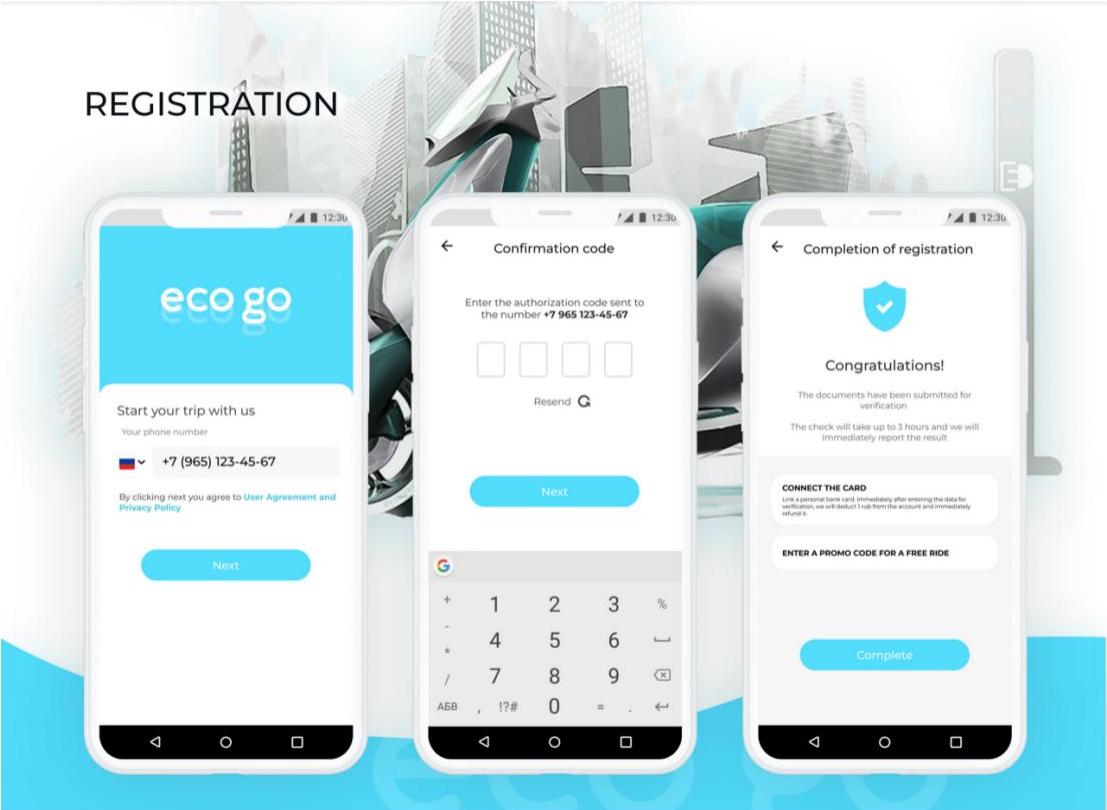
01 / Registration
Getting ready to ride
Phone verification and registration introduce riders to the sharing service.
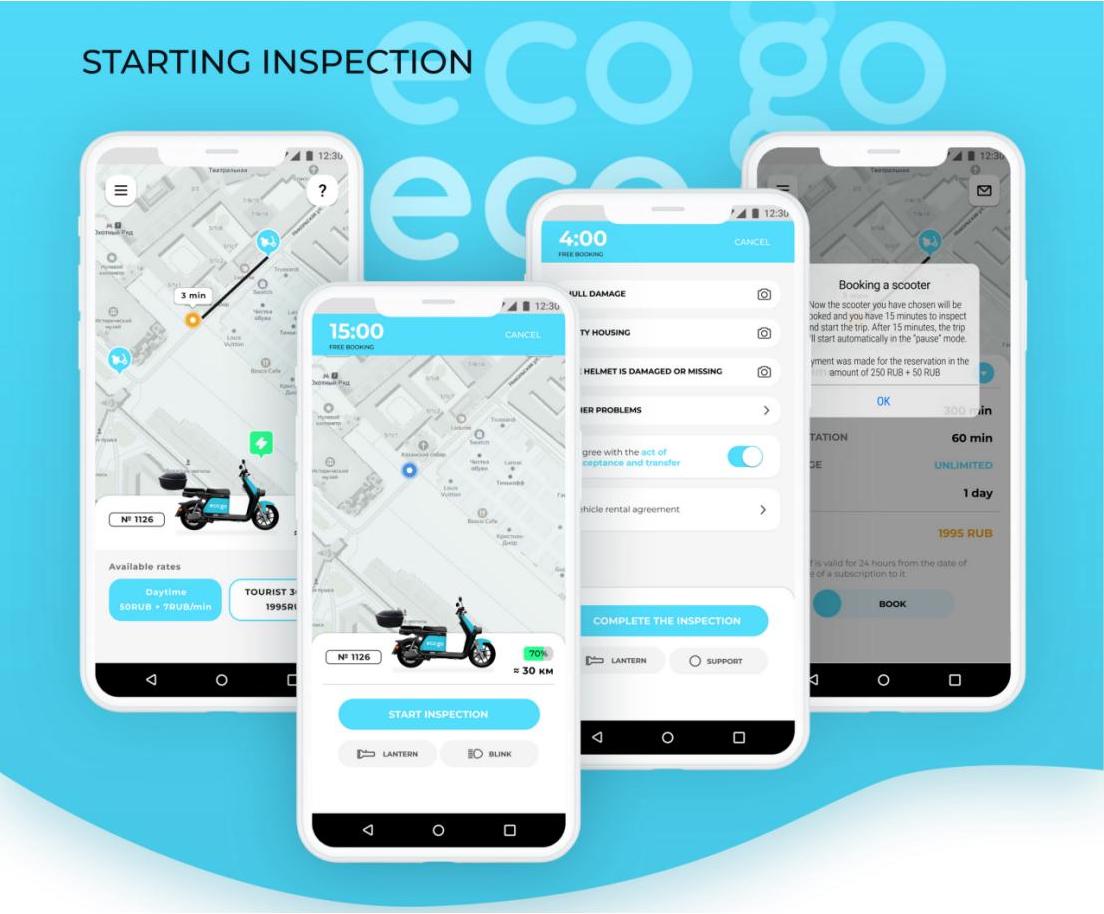
02 / Starting inspection
Find, reserve and inspect
The original screens connect vehicle discovery, booking and inspection before a trip.
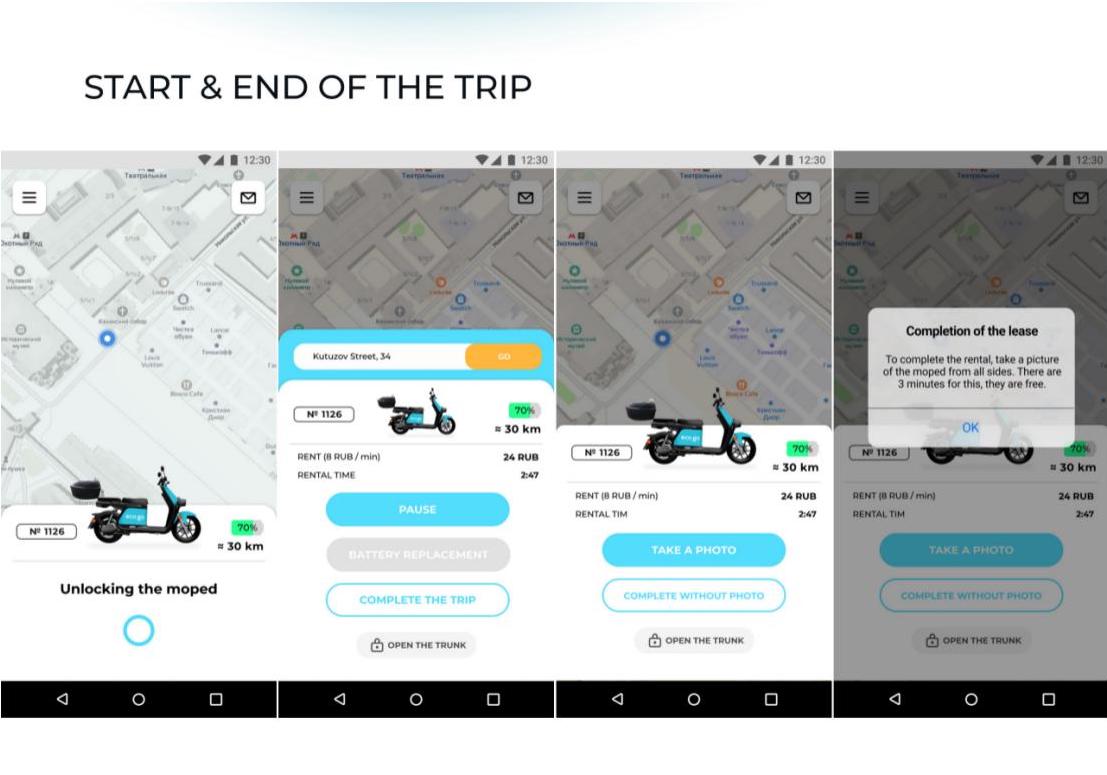
03 / Trip controls
From unlock to trip completion
Ride controls keep the active rental and trip-completion steps together.
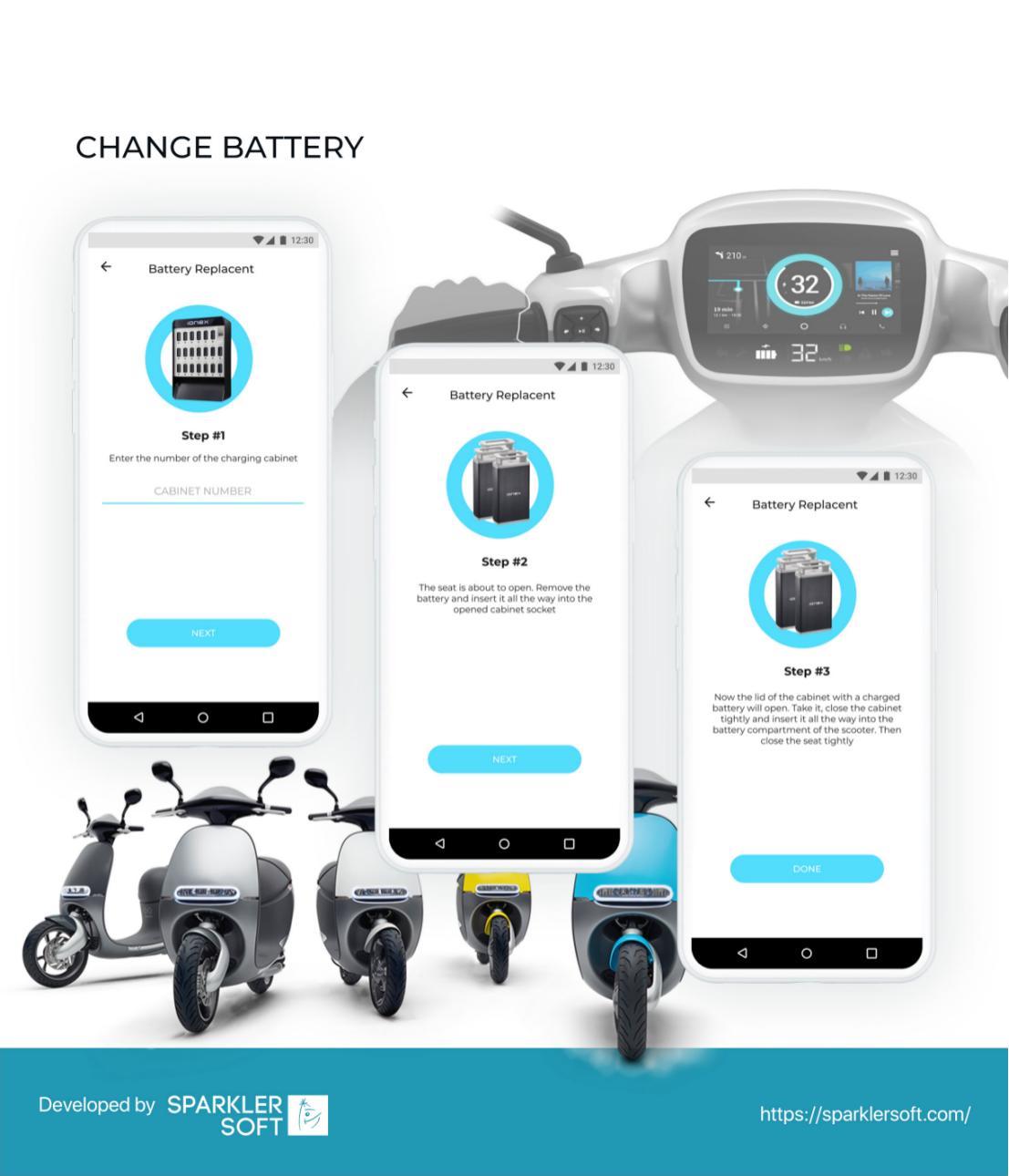
04 / Battery replacement
A fresh battery, step by step
Guided instructions connect the mobile experience with the replaceable-battery infrastructure.
Product identity
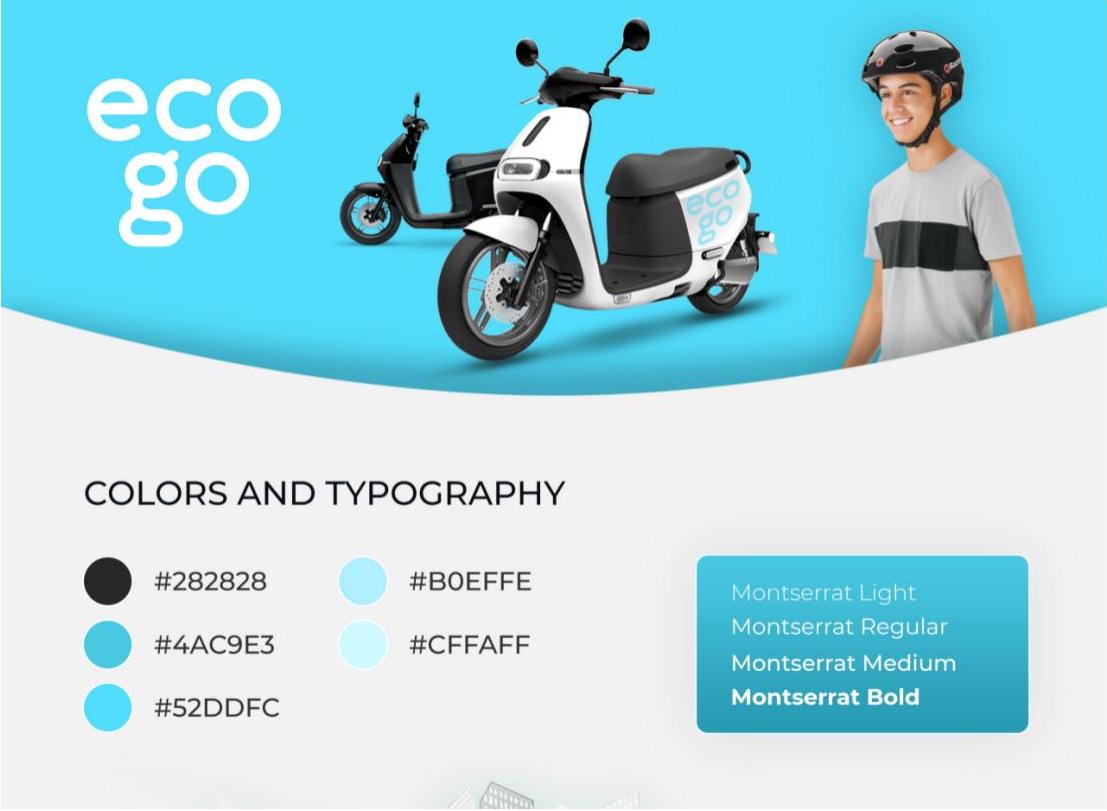
A distinctive visual language.
Bright cyan, pale blue and charcoal details define the original Eco-Go identity. Montserrat typography carries the visual language across registration, trip controls and battery replacement.
Building a mobility or IoT platform?
Let’s connect your mobile applications, backend services and physical infrastructure.