Concept / R&D / Smart homes / Hospitality
EcoHome.
Stay closer to nature.
Manage it digitally.
A concept for autonomous dome accommodation, combining renewable energy and smart-home systems with digital booking, contactless stays and property management.
- Project
- EcoHome
- Sector
- Eco-accommodation & hospitality
- Status
- Idea / Concept · NDA-related R&D
- Focus
- Booking & smart-home management
Autonomous accommodation managed through a digital platform.
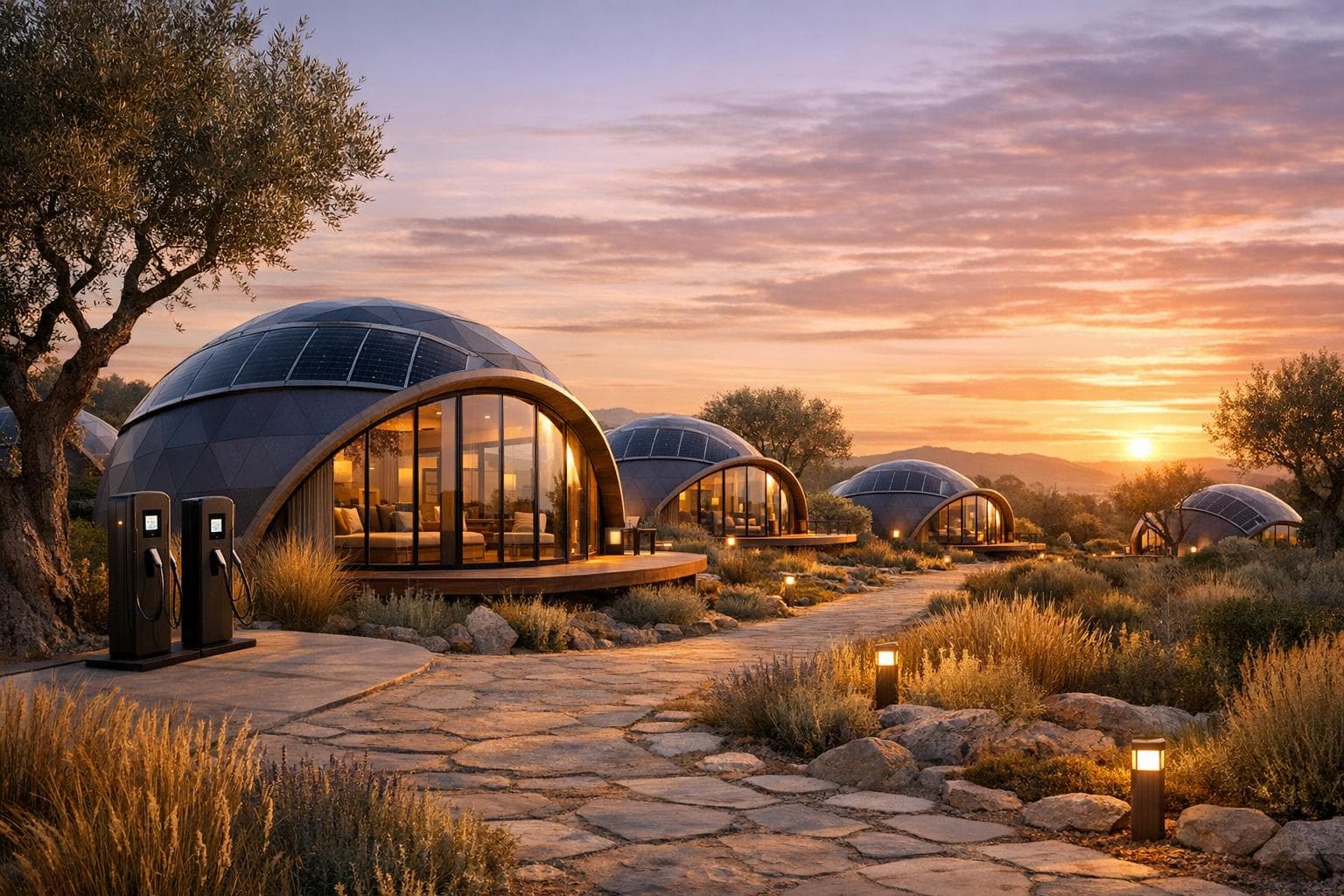
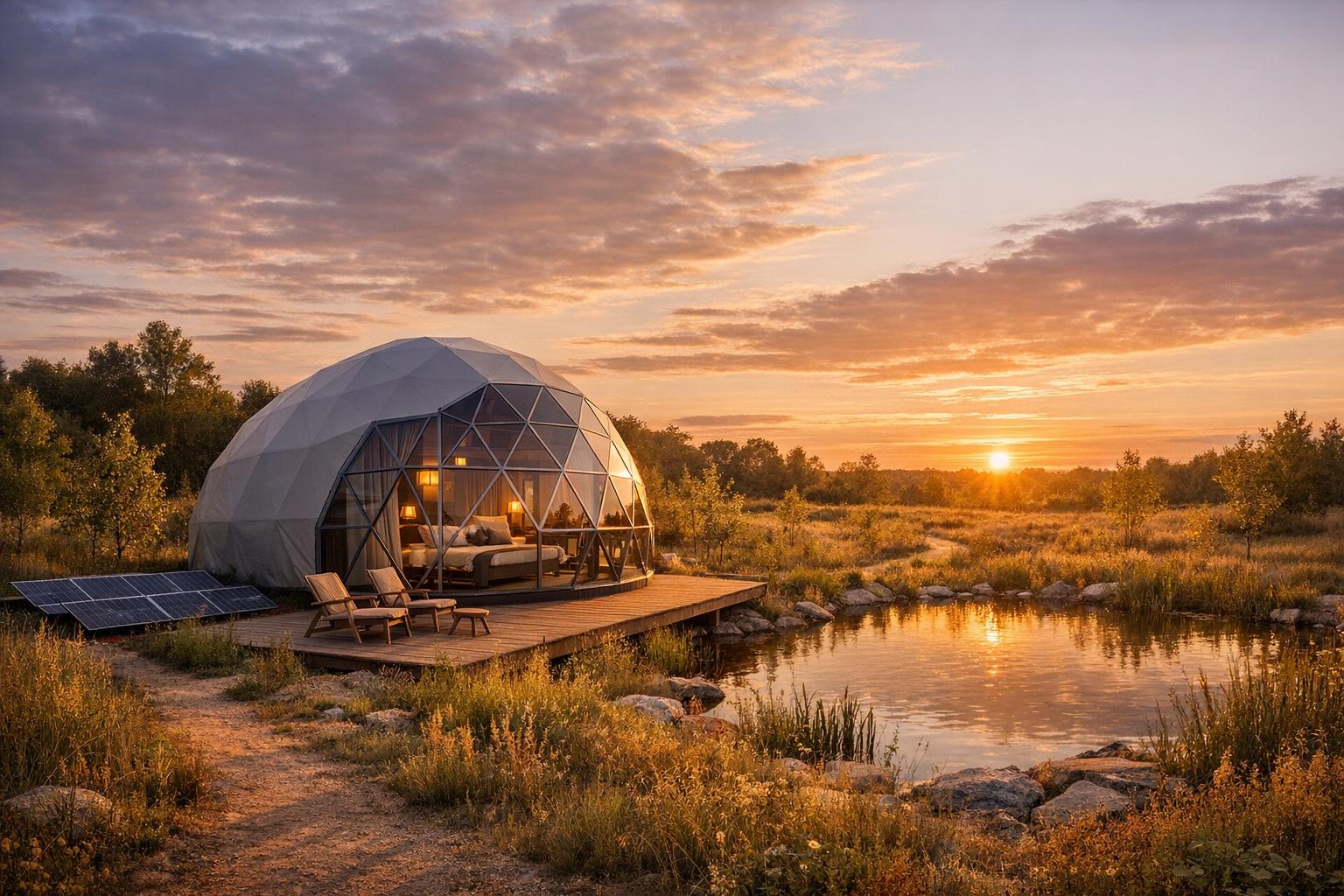
EcoHome is a concept for a network of autonomous eco-friendly dome houses available for short-term rental in countries with a predominantly warm climate.
The project combines dome-based hospitality, renewable energy, smart-home infrastructure and mobile applications for booking, contactless check-in, check-out and remote property management.
The concept is intended for nature-conscious travellers, people interested in sustainable living and guests looking for a quieter, more independent alternative to traditional accommodation.
EcoHome is designed as a self-sufficient hospitality experience: guests can manage their stay digitally while the property operates with minimal dependence on centralised infrastructure and permanent on-site staff.
From individual domes to eco-villages.
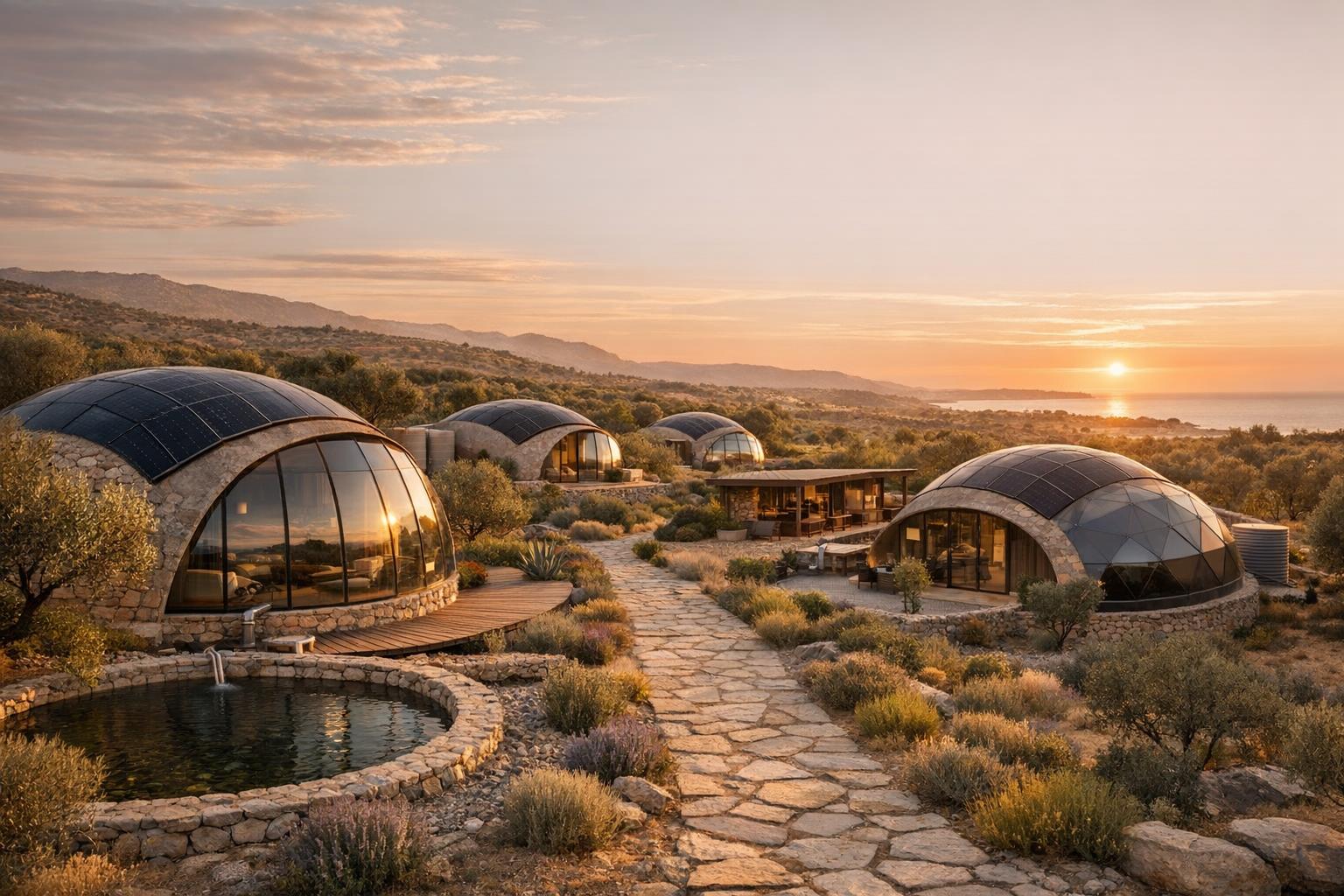
EcoHome can be developed in several stages. The initial format may consist of individual autonomous rental units located in attractive natural or tourist destinations.
A later stage could introduce complete eco-villages with shared technical, service and recreational infrastructure.
The long-term direction includes the possibility of creating a franchise network supported by a central digital platform, common operating standards and a recognisable brand.
Individual rental units
Autonomous dome houses for short-term accommodation in natural, coastal, rural or resort locations.
Eco-villages
Groups of houses supported by shared infrastructure for maintenance, utilities, leisure and guest services.
Digital management
Mobile applications and operator tools for reservations, access, smart-home control and service coordination.
Franchise expansion
A potential model for scaling the concept across multiple locations and countries.
Renewable and autonomous energy systems.
The concept assumes that each house should operate as an autonomous or highly self-sufficient unit with minimal dependence on centralised utility networks.
The primary energy scenario is based on solar power generated by photovoltaic panels and stored in battery systems.
Depending on the location and technical requirements, a mixed solar-geothermal model could also be considered. Solar energy could provide electricity, while geothermal technology could support heating, cooling and hot-water production.
Primary energy source
Solar photovoltaic panels
Energy storage
Battery storage and intelligent load management
Alternative system
Combined solar and geothermal technologies
Operating principle
Autonomous operation with reduced grid dependency
The exact level of autonomy would depend on the size of the house, climate, number of guests, seasonality, water consumption and technical requirements of the selected location.
Smart-home infrastructure.
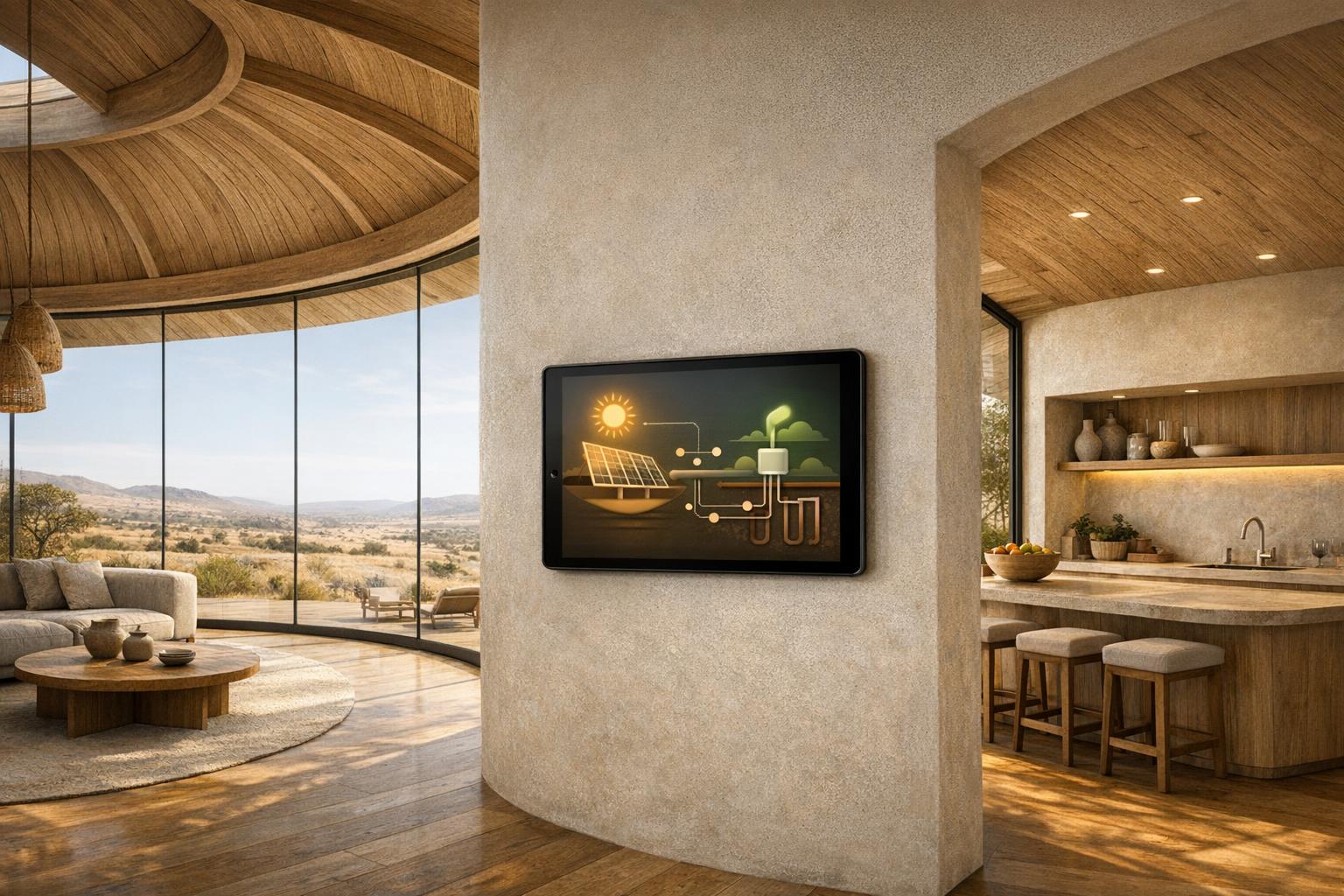
Smart-home functionality is a central part of the EcoHome concept. The house should be manageable through a digital interface and able to automatically optimise energy use and basic comfort settings.
The system could connect lighting, climate control, access systems, energy monitoring, water-related sensors and safety equipment.
Digital access
Electronic locks and mobile access credentials for contactless arrival and departure.
Climate control
Remote management of temperature, ventilation and selected heating or cooling systems.
Energy monitoring
Information about current energy availability, consumption and battery status.
Safety sensors
Potential monitoring of smoke, leaks, temperature, humidity and other critical conditions.
Potential smart-home scenarios
Arrival Mode: prepares the house for the guest by activating access, basic lighting and comfort settings.
Eco Mode: reduces secondary energy consumption and optimises the use of available resources.
Night Mode: adjusts lighting, climate and selected systems for overnight use.
Departure Mode: turns off selected systems, secures the property and creates service tasks.
Android and iOS applications.
The digital experience is expected to include mobile applications for guests and a management environment for operators.
Guest application
Registration and user account management.
Search and selection of available houses.
Availability calendar and booking.
Online payment and booking confirmation.
Digital check-in and check-out.
Mobile access to the property.
Smart-home control.
House rules and operating instructions.
Requests for additional services.
Communication with support.
Notifications and stay-related updates.
Operator platform
Management of houses and locations.
Booking calendar and occupancy control.
Pricing and availability management.
Energy and equipment status monitoring.
Cleaning and maintenance scheduling.
Wastewater and sanitation service tasks.
Technical issue management.
Guest communication.
Reports and operational analytics.
Management of multiple locations.
Maintenance without permanent on-site staff.
The concept does not assume that the properties can operate without maintenance. Instead, it aims to reduce the need for permanent staffing at every location through digital management and scheduled service visits.
A distributed maintenance team could visit the houses according to occupancy, predefined schedules or automatically generated service requests.
House cleaning
Cleaning, linen replacement and preparation of the property after a guest’s departure.
Energy system service
Inspection of solar panels, batteries, inverters and related control systems.
Wastewater maintenance
Scheduled cleaning and maintenance of local wastewater and sanitation systems.
Technical support
Preventive inspections, equipment replacement and response to system notifications.
Eco-village infrastructure.
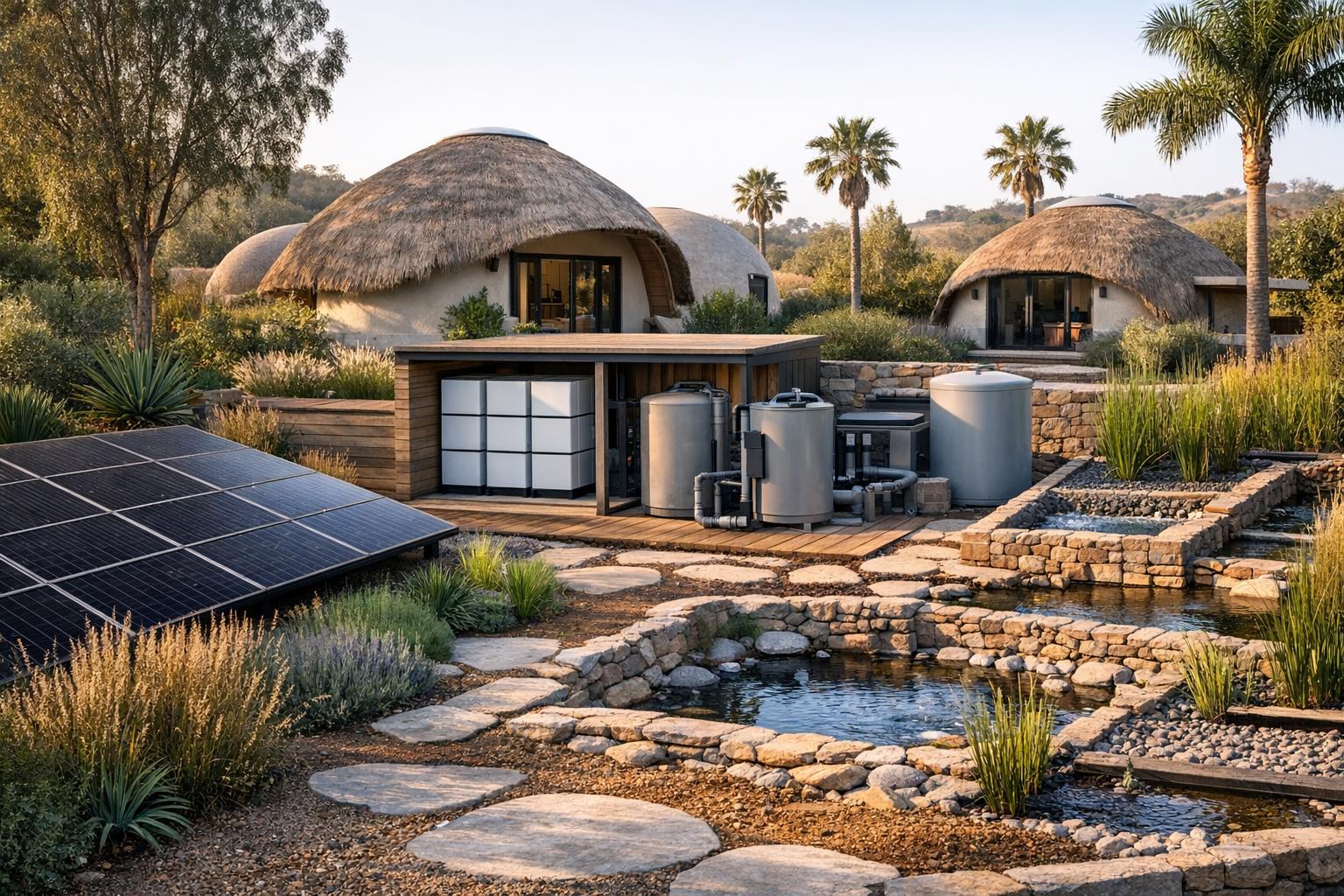
A larger EcoHome location could include shared infrastructure supporting both guests and the operating team.
Potential shared facilities may include:
Technical and maintenance buildings.
Central laundry facilities.
Charging stations for electric vehicles.
Equipment storage and service areas.
Waste sorting and recycling facilities.
Water treatment and wastewater systems.
Shared recreation and wellness areas.
Walking and nature observation routes.
Small cafés, shops or community spaces.
Facilities for local transport and bicycles.
Sustainable interaction with nature.
EcoHome is intended for people who are interested in nature protection, renewable energy, responsible travel and the restoration of natural environments.
The idea is not limited to placing unusual accommodation units in a scenic location. The project could also support the careful development and restoration of the surrounding territory.
The long-term vision is to create hospitality spaces that do not simply occupy natural areas, but help protect, restore and explain their surrounding environment.
Potential environmental principles include:
Use of renewable energy wherever technically possible.
Reduced dependence on fossil fuels.
Efficient use and local treatment of water.
Responsible wastewater management.
Waste sorting and recycling.
Use of lower-impact construction materials.
Planting native species and restoring vegetation.
Protection of soil and natural habitats.
Reduction of unnecessary light pollution.
Environmental education for guests.
Target audience.
The concept may be relevant to a broad audience interested in alternative tourism and sustainable living.
Nature-conscious travellers.
Eco-tourism enthusiasts.
Wellness and retreat guests.
Couples and small families.
Digital nomads.
Glamping and design accommodation customers.
Travellers looking for privacy and independence.
People interested in renewable energy.
Supporters of nature restoration and conservation.
Franchise-based expansion.
EcoHome may be developed as a franchise model for partners who want to create autonomous hospitality locations under a shared brand and operating framework.
The central organisation could provide the brand, digital platform, design principles, operational standards, marketing materials and launch support.
Brand and concept
A recognisable identity and hospitality concept for autonomous eco-accommodation.
Technology platform
Booking, property management, smart-home integrations and centralised operational tools.
Operating standards
Guidelines for maintenance, cleaning, guest experience and technical service.
Launch support
Potential support with location preparation, digital setup, training and marketing.
Existing software foundation.
The project has an existing software product that may serve as a potential foundation for further development. Preliminary project work and related materials are also available.
Depending on the results of a technical audit, existing components could potentially be adapted for:
Booking and availability management.
User accounts and authentication.
Payment processing.
Property and location management.
Operator dashboards.
Notifications and service requests.
Electronic access control.
Smart-home integrations.
Energy monitoring.
Multi-location and franchise management.
The exact capabilities of the existing software donor require a separate technical review and should not be treated as confirmed functionality of the future EcoHome platform.
Potential business model.
EcoHome could combine hospitality revenue with digital platform and franchise income.
Short-term and daily house rental.
Additional guest services.
Wellness and nature activities.
Local tours and experiences.
Franchise fees.
Platform or software subscription fees.
Booking commissions.
Installation and maintenance services.
Eco-village infrastructure services.
Potential locations.
The concept may be suitable for different warm-climate destinations and natural environments, subject to local planning, construction, environmental and hospitality requirements.
Coastal areas and islands.
Mountain and foothill regions.
Rural tourism destinations.
Desert and semi-desert landscapes.
Wine-producing regions.
Natural parks and conservation areas.
Wellness and retreat locations.
Areas near thermal or geothermal resources.
Project status and next steps.
EcoHome is currently at the idea and concept stage. The project includes an existing software product that may serve as a donor foundation and preliminary project work for further development.
Further work would require validating the business model, choosing a pilot region, preparing engineering assumptions and reviewing the software foundation.
Select a target country and pilot location.
Define the target customer segment.
Prepare the technical concept of one autonomous house.
Compare solar-only and solar-geothermal energy scenarios.
Define water, sanitation and wastewater systems.
Audit the existing software product.
Prepare the first booking and property-management MVP.
Define the smart-home integration layer.
Estimate construction and operating costs.
Validate legal, environmental and hospitality requirements.
Prepare the franchise and eco-village development model.
EcoHome is an Idea / Concept and NDA-related R&D Direction. It does not represent a currently operating rental network, completed eco-village, certified autonomous building system or launched franchise. The described energy, smart-home, infrastructure and business-model elements represent potential product directions and require engineering, legal, environmental, financial and market validation.
EcoHome vision
A connected stay in a natural setting.
Conceptual illustrations of accommodation, smart-home controls and shared infrastructure. They represent a proposed experience, rather than photographs of an operating rental network.
Developing a smart hospitality concept?
Let’s shape your booking experience, property operations and smart-home integrations.