Confidential / NDA / White-label / FinTech
Extra.
Digital assets.
One connected experience.
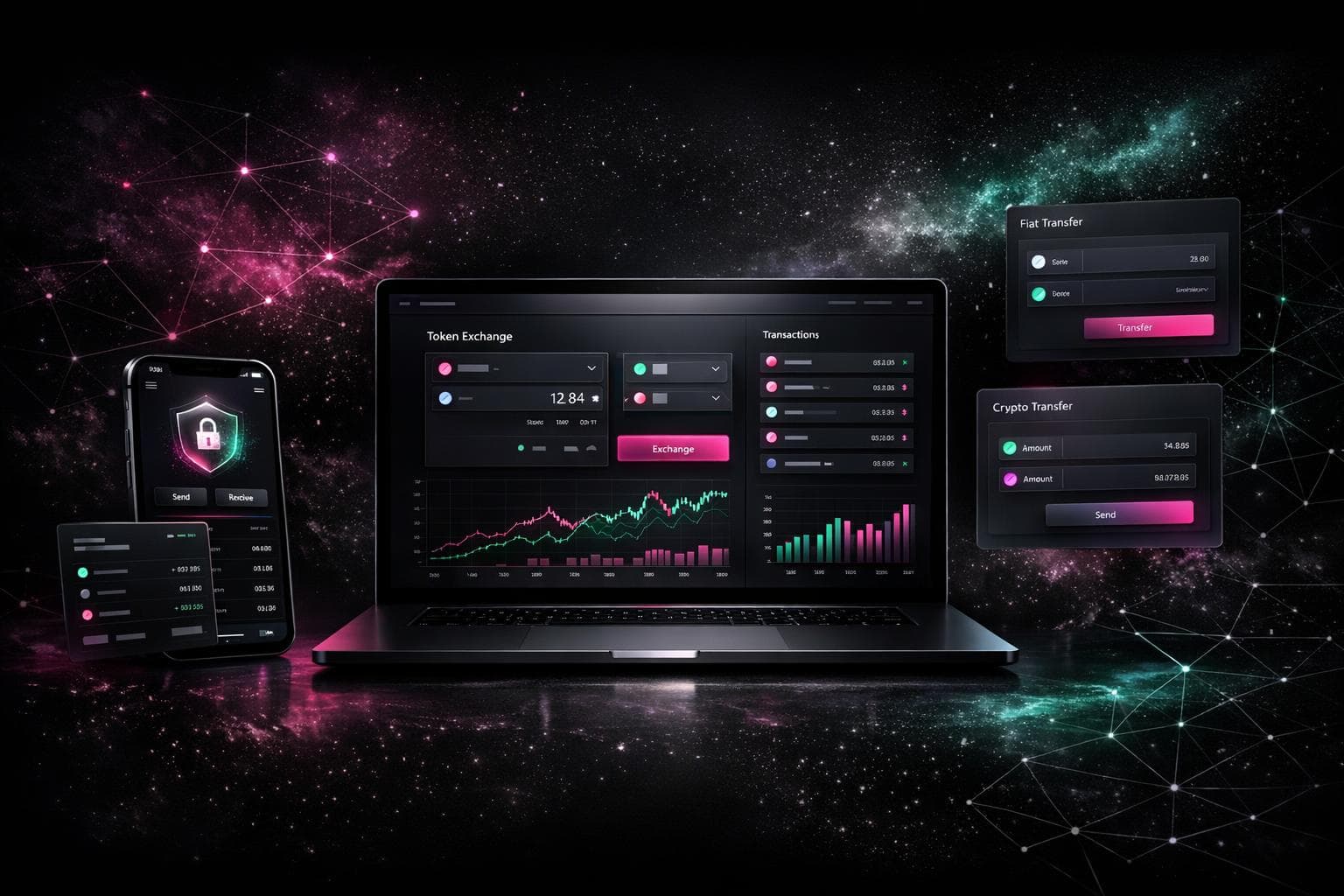
A confidential Web3 financial infrastructure concept bringing together wallet management, exchange workflows and digital-asset operations across web and mobile interfaces.
- Project
- Extra
- Sector
- FinTech / Web3 / DeFi
- Status
- Confidential concept / NDA
- Focus
- Wallet & exchange
A digital finance ecosystem built around asset ownership.
Extra FinTech is a confidential Web3 and fintech platform concept designed to combine digital-asset management, cryptocurrency exchange functionality and blockchain-based financial services.
The product architecture was intended to connect a crypto wallet, DeFi trading functionality, fiat operations, token management, payment services and administrative financial controls within one ecosystem.
A unified infrastructure for storing, exchanging and managing digital assets across a growing Web3 product ecosystem.
Core Product Components
Crypto Wallet
A central wallet layer for storing assets, viewing balances, transferring funds, exchanging tokens and connecting to blockchain services.
DeFi Exchange
Exchange and trading functionality for cryptocurrencies, tokens and selected digital assets with market data and order management.
Token Ecosystem
A conceptual framework for developing and integrating a proprietary token with the wallet, exchange and related financial products.
Administration
Role-based tools for user management, transaction monitoring, fees, reporting, support, security and operational control.
Universal Crypto Wallet
The wallet was considered the central component of the platform and the primary point of interaction with digital assets.
The planned functionality included:
Creation and connection of cryptocurrency wallets.
Digital-asset storage.
Cryptocurrency deposits and withdrawals.
Buying and selling digital assets.
Token exchange.
Balance and portfolio overview.
Transaction history.
Mnemonic phrase management.
Protected handling of private keys.
Smart-contract interactions.
Staking-related functionality.
Potential lending features.
Connection to selected DeFi services.
The concept also considered future integration with fast cryptocurrency payment solutions, including QR-based payment scenarios and other everyday transaction flows.
DeFi Exchange
The exchange layer was designed to support operations with cryptocurrencies, stablecoins and other digital tokens.
Potential exchange functionality included:
Purchasing digital assets with fiat currencies.
Selling cryptocurrency.
Cryptocurrency-to-cryptocurrency exchange.
Token swaps.
Deposits and withdrawals.
Market and fixed-price operations.
Creation and execution of user orders.
Market quotation display.
Price alerts.
Charts and historical market data.
Configurable platform fees.
Adding new currencies and tokens.
The original concept also included the possibility of promoting a proprietary token through exchange-based campaigns, special conditions and user programmes.
Proprietary Token Concept
A separate workstream focused on the potential development of a proprietary ERC-20 token and its integration with the wider financial platform.
The token-related scope included:
Token development.
Definition of issuance parameters.
Interaction with stablecoins.
Exchange against other tokens.
Integration with the wallet and exchange.
Potential token utility and incentive mechanisms.
Economic model development.
Smart-contract interaction.
The actual token issuance status, token parameters, blockchain deployment and operational availability require confirmation. The public description presents this area as a product concept and technical direction.
User Experience
The platform concept included a personal account and a unified interface for digital-asset operations.
Registration and authentication.
Sign-in by email or phone number.
Personal dashboard.
Bank-card connection.
Fiat-currency operations.
Cryptocurrency operations.
Balance and transaction history.
Order creation and management.
Price alerts.
Market charts.
Customer support requests.
Communication with platform representatives.
User verification procedures.
Administrative Platform
The administrative part was designed around role-based access and operational control.
Potential user roles included:
Regular users.
Administrators.
Moderators and managers.
Financial specialists.
Accountants.
Super-administrators.
The administrative panel could include:
User management.
Role and permission configuration.
User-data verification.
Transaction monitoring.
Fee configuration.
Financial reporting.
Operational analytics.
Log management.
Audit trails.
Market and quotation management.
Adding new assets.
Technical support tools.
Security controls.
Security and Compliance Requirements
Security and compliance were identified as essential areas of the product architecture.
Encryption of user data.
Protection of payment information.
Secure handling of private keys.
User verification.
KYC procedures.
Source-of-funds analysis.
Financial transaction monitoring.
Payment-data protection requirements.
Security audits.
Transaction protection.
The items above describe technical requirements and areas of product analysis. They should not be interpreted as confirmation of active certifications, regulatory licences or completed compliance audits unless separately verified.
Potential Product Ecosystem
The wallet and exchange were considered as shared financial infrastructure for several potential digital products, including:
DeFi exchange services.
Cryptocurrency marketplace functionality.
Blockchain-based payment services.
Digital products connected to the wider ecosystem.
Future token-based services.
Specific product names, commercial relationships and ecosystem dependencies are not disclosed in the public portfolio version.
Business Value
For users
Single interface for multiple digital-asset operations.
Convenient wallet and portfolio management.
Access to cryptocurrency exchange functionality.
Potential connection between fiat and crypto operations.
Transparent transaction history.
Price notifications and market monitoring.
For the platform operator
Centralised control over users and financial operations.
Configurable fees and asset-management workflows.
Potential infrastructure for multiple Web3 products.
Support for token-based product strategies.
Scalable architecture for future digital-asset services.
Structured tools for reporting, support and monitoring.
Potential Product Roadmap
Advanced asset portfolio management.
Expanded DeFi integrations.
Staking services.
Lending-related functionality.
Blockchain-based payment scenarios.
QR-code cryptocurrency payments.
Proprietary token development.
Token utility and incentive programmes.
Additional market data integrations.
Expanded reporting and compliance tools.
Marketplace and ecosystem integrations.
Current Status
Based on the available materials, the project included:
A product concept for a Web3 financial platform.
A defined crypto-wallet functionality scope.
A conceptual DeFi exchange structure.
User and administrative workflows.
Operations with cryptocurrency and fiat funds.
A potential proprietary token direction.
External-service integration requirements.
Security and verification requirements.
Visual materials for the Extra FinTech concept.
The actual implementation stage, availability of a working product, operational status of the exchange, token issuance and completed certifications require separate confirmation.
This project is presented as a confidential NDA / White-label case study. The description reflects a product concept and technical analysis. It does not confirm the existence of a live exchange, issued token, active financial licence, completed certification or production-ready financial service.
Concept visuals
A connected digital finance ecosystem.
Conceptual illustrations of cross-platform asset management, exchange workflows, token infrastructure and wallet access. These images describe the product direction rather than a verified live financial service.




Interface presentation
The original Extra design study.
Supplied design presentation covering the visual identity, main website, company pages, tariffs, wallets, transfers and news. Interface copy, figures and partner marks are shown as part of the design study and do not verify current operations or commercial relationships.

Building a Web3 or fintech product?
Let’s structure your wallet workflows, digital-asset interfaces and financial platform requirements.