Confidential / NDA / White-label / HealthTech
Mobile Tele Kit.
Connected care.
Beyond the clinic.
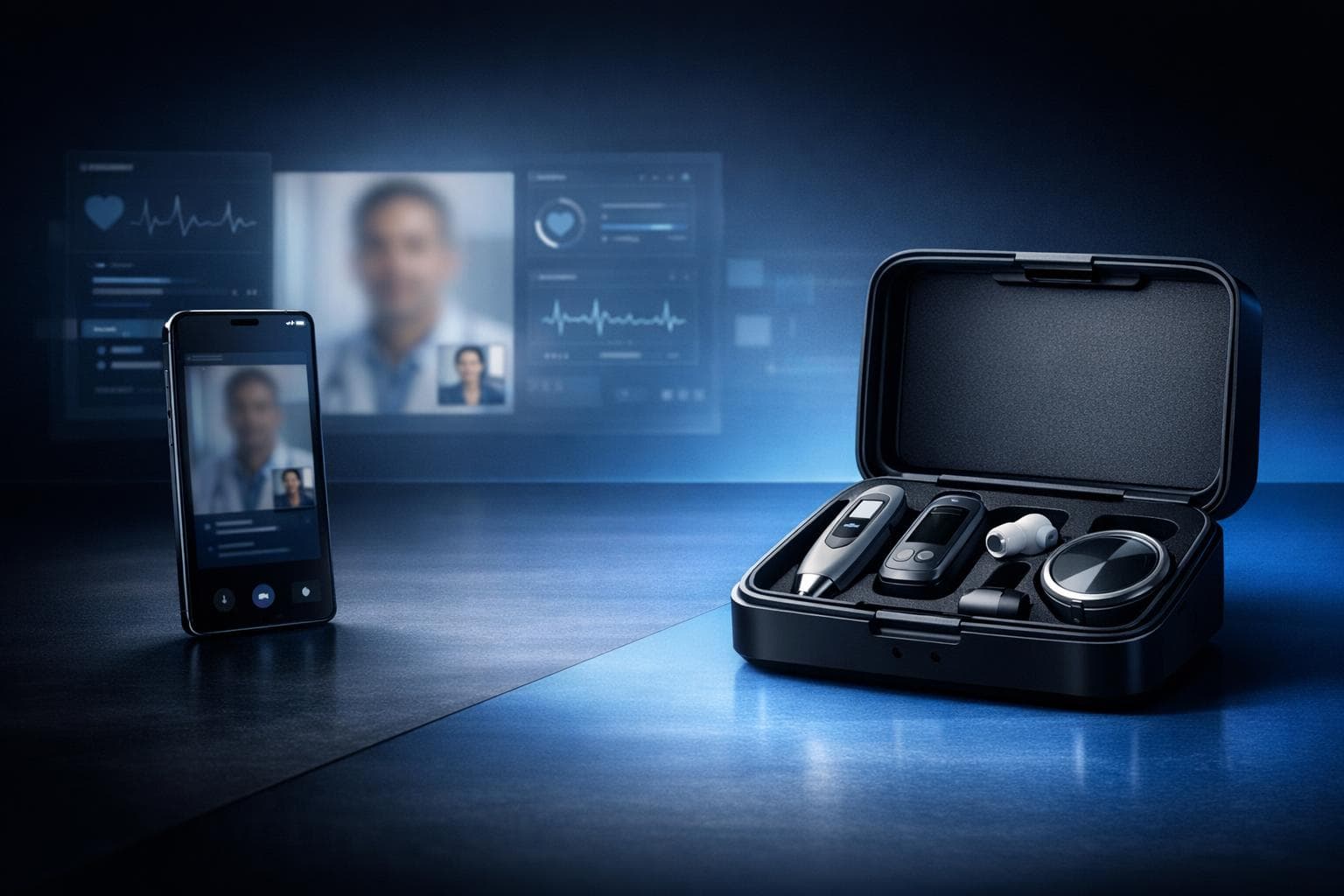
A telemedicine prototype and product concept connecting home measurements, patient applications and remote healthcare workflows through portable medical devices.
- Project
- Mobile Tele Kit
- Sector
- HealthTech & telemedicine
- Status
- Prototype / NDA
- Focus
- Home monitoring
Healthcare monitoring beyond the clinic.
Mobile Tele Kit is a confidential telemedicine solution concept designed for home diagnostics, preliminary patient assessment and remote collection of medical observations.
The platform combines mobile applications with a connected multi-functional medical device. Collected health data can be transferred to medical professionals or healthcare organisations for further review and remote monitoring.
A connected healthcare workflow that helps collect patient data at home and make remote observation more structured.
Primary Objectives
Support preliminary assessment outside a medical facility.
Collect patient health indicators remotely.
Support regular monitoring of patients at home.
Reduce the workload associated with initial examinations.
Accelerate the collection of essential medical information.
Help identify potentially critical changes in health data.
Support communication between patients, doctors and relatives.
Product Components
Patient Mobile App
A mobile interface for performing measurements, receiving reminders, reviewing personal data and sharing observations.
Connected Medical Device
A portable multi-functional device concept for collecting several basic health indicators at home.
Doctor Workflow
A remote observation concept for reviewing patient data, monitoring changes and supporting preliminary analysis.
Backend and Administration
Server-side infrastructure and administrative tools for data management, users, monitoring and operational control.
Diagnostic Capabilities of the Prototype
The prototype was designed to work with a mobile device described as a five-in-one diagnostic solution.
The available measurements included:
Blood pressure.
Blood glucose level.
Blood oxygen saturation.
Mobile electrocardiogram data.
Body temperature.
The architecture also allowed for potential future connection of additional diagnostic equipment.
Potential Additional Devices
Digital endoscope.
Electronic stethoscope.
Additional home-monitoring sensors.
Other compatible medical devices.
The availability, accuracy, certification and regulatory status of the diagnostic device and any connected equipment require separate confirmation. The public portfolio description presents these capabilities as part of the prototype concept.
Patient Experience
The patient-facing part of the platform was designed to make regular health monitoring more accessible outside a medical centre.
Potential patient features included:
Performing measurements at home.
Receiving instructions for each measurement.
Sending collected data to a doctor or medical centre.
Viewing personal health observations.
Keeping a monitoring diary.
Receiving push notifications.
Getting reminders for scheduled diagnostics.
Receiving medication reminders.
Sharing selected data with relatives.
Sending alerts when critical values are detected.
Doctor and Healthcare Organisation Workflow
The doctor-oriented part of the solution was intended to support remote observation and preliminary review of patient data.
Access to collected patient measurements.
Remote monitoring of patient health indicators.
Review of measurement history.
Observation of health-data dynamics.
Preliminary analysis of submitted information.
Identification of potentially concerning changes.
Communication with the patient.
Management of patient-monitoring workflows.
The concept also included the possibility of introducing AI-assisted monitoring and data analysis to help identify patterns that may require additional attention.
AI-assisted monitoring is presented as a potential development direction. The available materials do not confirm that a clinical AI model or automated diagnostic system was implemented.
Alerts and Notifications
The platform concept included a notification system for patients, medical specialists and authorised relatives.
Possible notification scenarios included:
Reminder to perform a scheduled measurement.
Reminder to take prescribed medication.
Notification about missing observations.
Alert when a measurement exceeds a configured threshold.
Notification to a selected relative.
Notification to an authorised doctor or medical centre.
The final alert logic, threshold configuration and escalation procedures would require validation by qualified medical specialists.
Business Models
B2B Healthcare Services
The platform could be adapted for organisations that need to monitor patients remotely or streamline preliminary assessment.
Medical centres.
Insurance companies.
Patient-monitoring foundations.
Remote-care programmes.
Corporate healthcare providers.
Home-care organisations.
For B2B customers, the solution could be configured as a specialised white-label platform aligned with the organisation's workflows, medical procedures and data-access requirements.
B2C Subscription Service
The B2C direction was designed for individuals who need regular monitoring or want to coordinate health observations at home.
Patients requiring regular monitoring.
People living with chronic conditions.
Older adults.
Family members supporting a patient's care.
Users participating in home-observation programmes.
A possible subscription model could provide access to diagnostic workflows, monitoring diaries, reminders, alerts and selected remote-care services.
Supported Platforms
The project materials referred to a multi-platform application ecosystem.
Android application.
iOS application.
iPad support.
Apple Watch or similar wearable scenarios.
Backend services.
Administrative panel.
The available prototype information specifically confirms an Android application working with the mobile diagnostic device. The exact implementation status of the iOS, iPad and wearable versions requires confirmation.
Technical Architecture
According to the project materials, the proposed technical architecture included:
Backend: Java and Spring Boot.
Database: MongoDB.
Message broker: RabbitMQ.
Cloud infrastructure: Amazon Web Services.
Server environment: Linux.
Mobile technologies: Swift, C++, Java and Kotlin.
Development Scope
The original presentation included a preliminary development estimate for the main software components.
Backend services — 342 hours.
Mobile applications — 532 hours.
Administrative panel — 300 hours.
Total preliminary estimate — 1,174 hours.
The estimate and associated development cost represent an earlier planning document. They should not be treated as a current commercial proposal and require validation against the final technical specification.
Business Value
For healthcare organisations
More structured collection of patient information.
Potential reduction of routine preliminary-assessment workload.
Remote access to patient observations.
Support for home-monitoring programmes.
Improved communication with patients and relatives.
Potential integration with existing healthcare workflows.
For patients and families
Access to basic monitoring at home.
Reminders for measurements and medication.
Centralised personal health diary.
Potential faster communication with medical staff.
Notifications for selected family members.
Support for regular observation of health indicators.
Potential Product Roadmap
Development of the iOS version.
Expansion of iPad support.
Wearable-device support.
Integration with additional diagnostic devices.
Doctor and medical-centre dashboards.
Advanced monitoring diaries.
Medication-management workflows.
Configurable alert and escalation rules.
AI-assisted data analysis.
Integration with healthcare information systems.
White-label deployments for medical organisations.
Current Status
Based on the available materials:
The project exists as a telemedicine product concept.
An Android prototype was developed.
The Android application worked with a mobile diagnostic device.
A five-in-one measurement scenario was defined.
The iOS and Android application concept was prepared.
Backend and administrative components were outlined.
Potential B2B and B2C models were considered.
Further development with an investment or strategic partner was planned.
The exact status of the iOS version, doctor interface, administrative panel, medical-device certification, AI functionality and production deployment requires separate confirmation.
This project is presented as a confidential NDA / White-label case study. The page describes a telemedicine prototype and product concept. It does not confirm medical certification, regulatory approval, clinical validation, diagnostic accuracy, production deployment or active healthcare-provider integration.
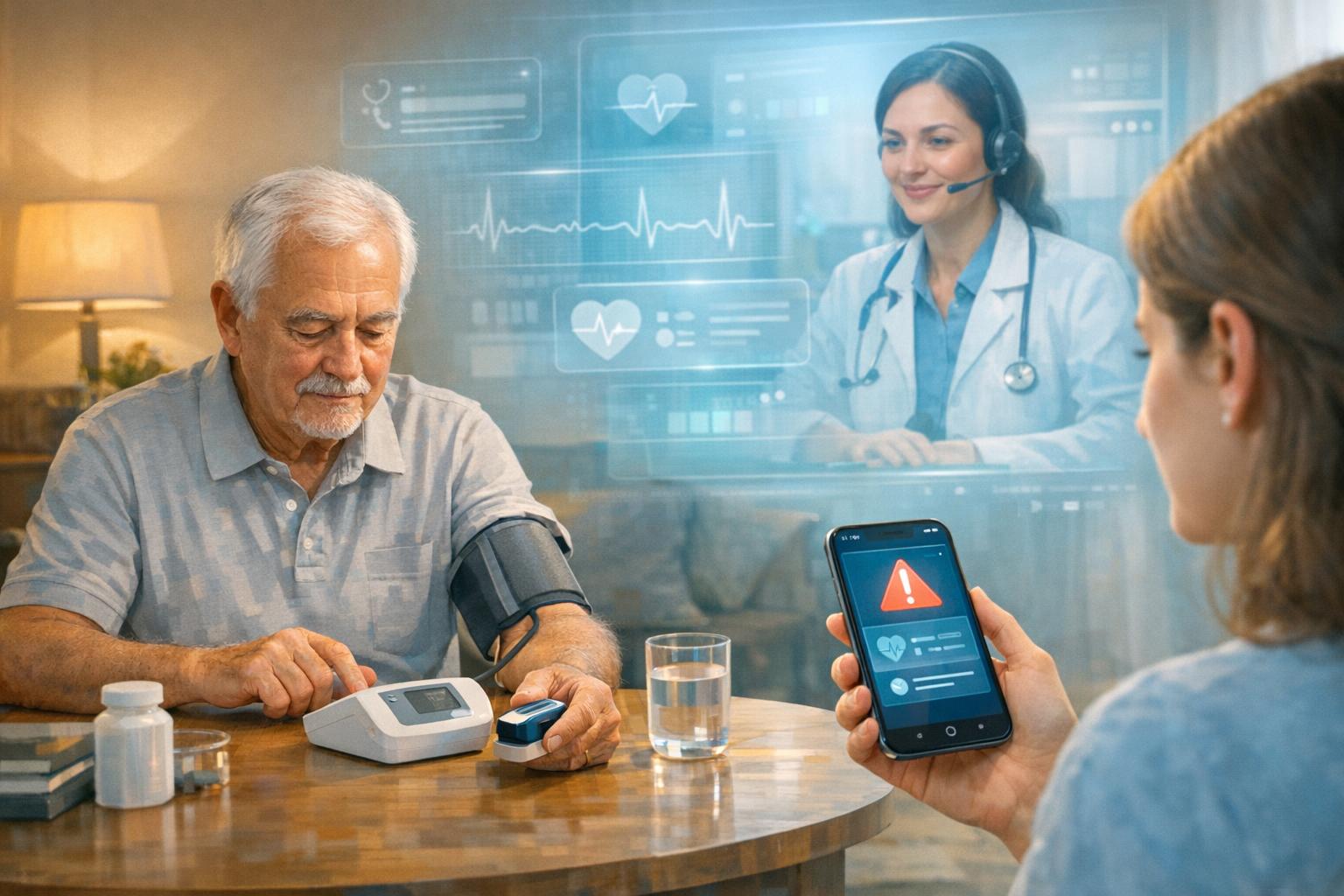
Concept visuals
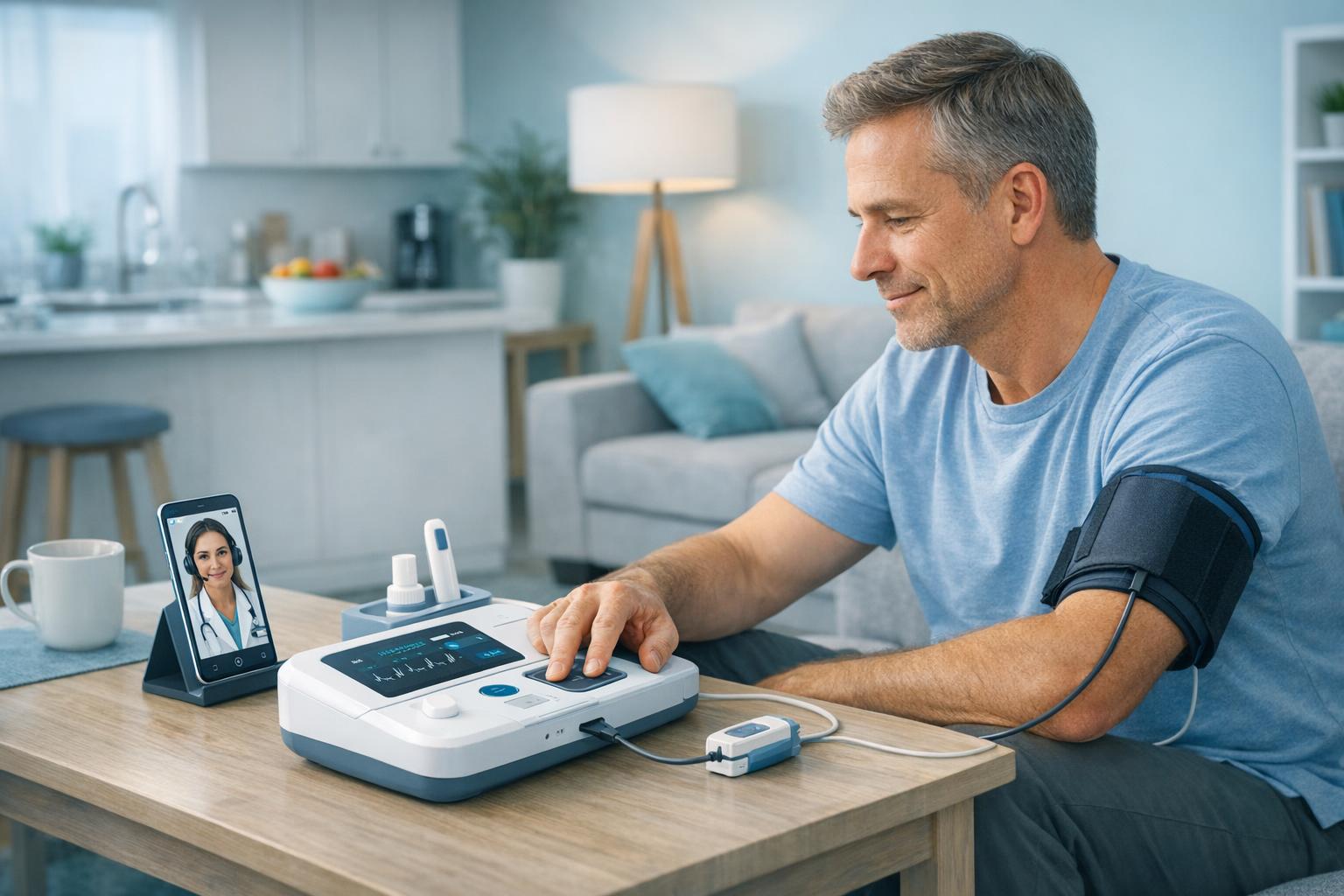
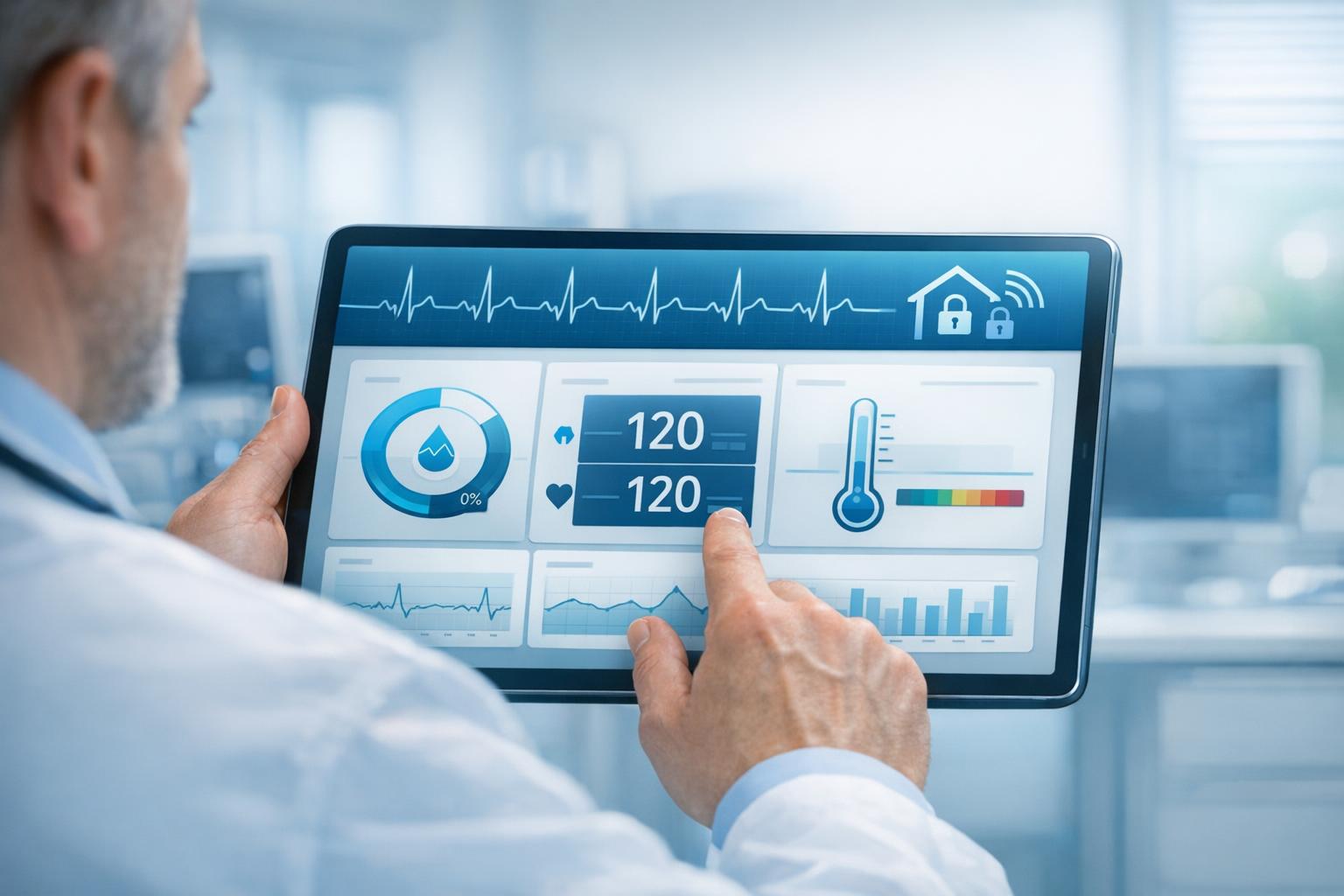
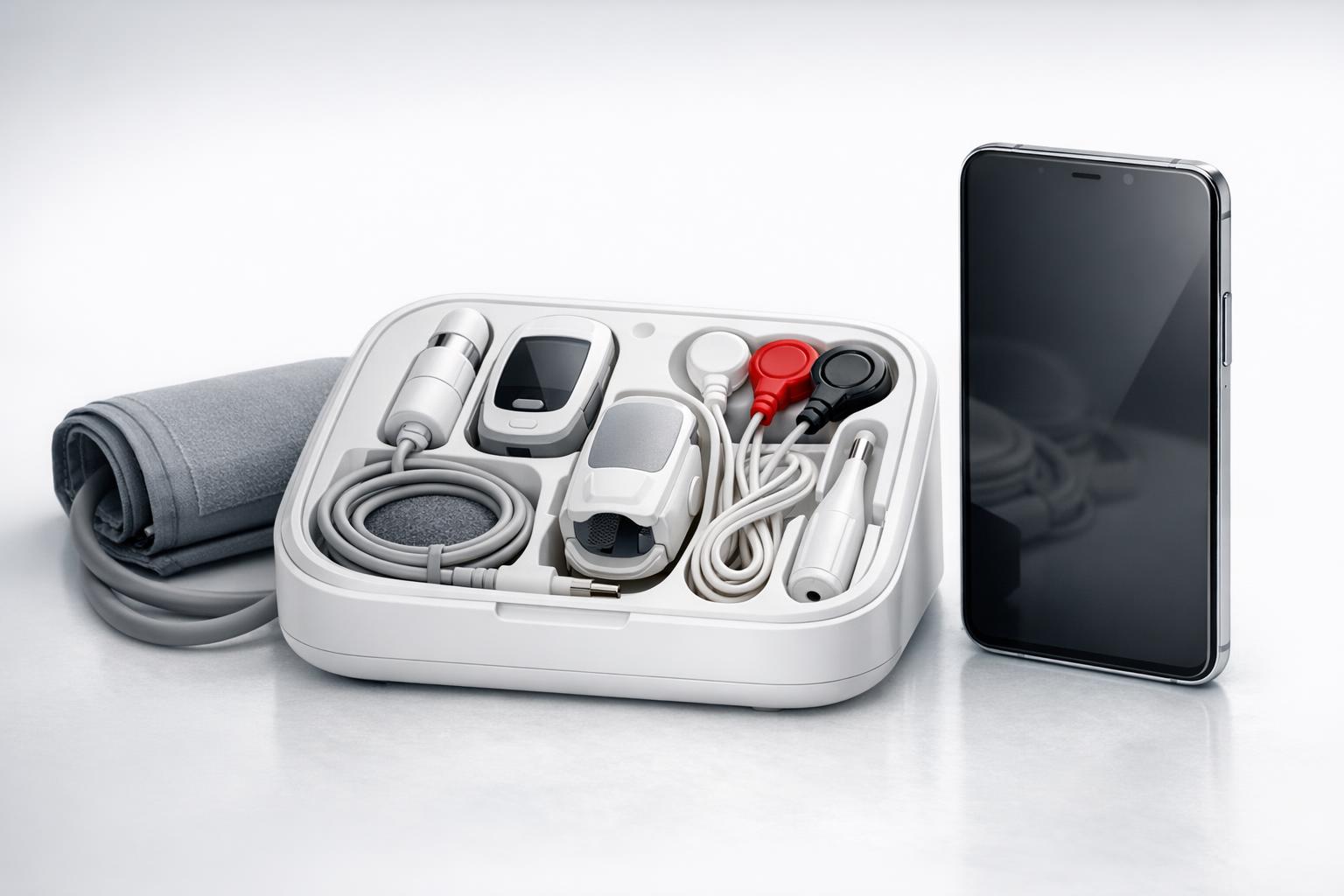
Connecting patients, devices and care teams.
Conceptual illustrations of home measurements, healthcare data review, portable devices and family support. These images describe potential workflows rather than verified clinical interfaces or certified device specifications.
Building a telemedicine or remote-care product?
Let’s structure your connected-device workflows, patient experience and healthcare platform requirements.