Confidential / NDA / White-label / FinTech
ReceiptSplit.
One receipt.
Everyone’s share, clearly.
A confidential mobile application concept that turns a shared restaurant or retail receipt into a clear breakdown of individual expenses.
- Project
- ReceiptSplit
- Sector
- FinTech & expense sharing
- Status
- Confidential concept / NDA
- Focus
- OCR & allocation logic
Making shared payments simple.
ReceiptSplit is a confidential mobile solution for dividing restaurant, café, retail or other shared expenses between several participants.
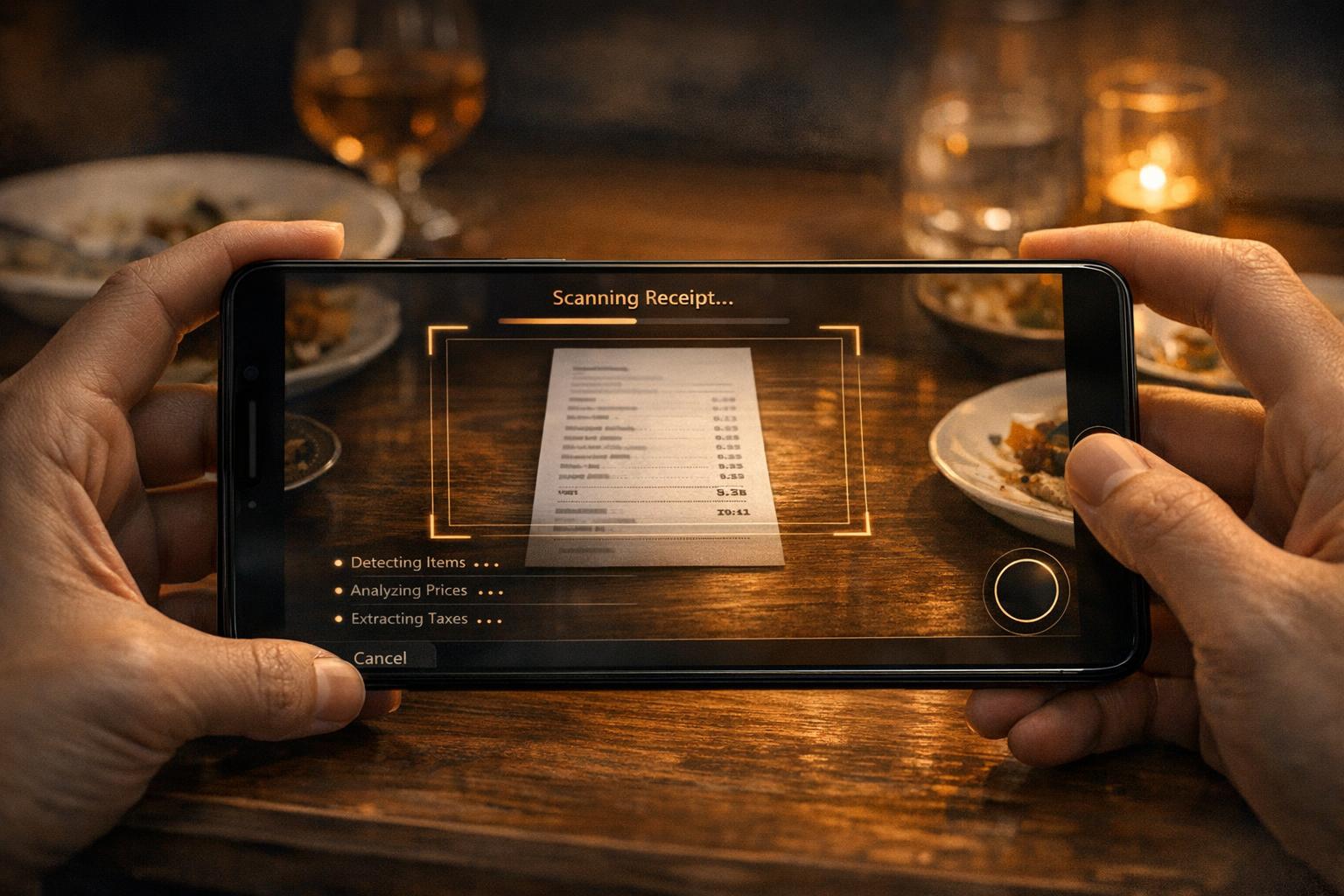
A user takes a photo of a receipt. The application recognises product names, services and amounts, after which participants can indicate who purchased or consumed each item.
One receipt becomes a transparent calculation showing exactly how much each participant should pay.
Receipt recognition
The application is designed to process a receipt image and extract the main transaction data, including item names, quantities and prices.
The concept includes OCR-based processing. The exact third-party service and production implementation remain confidential.
Flexible allocation of items
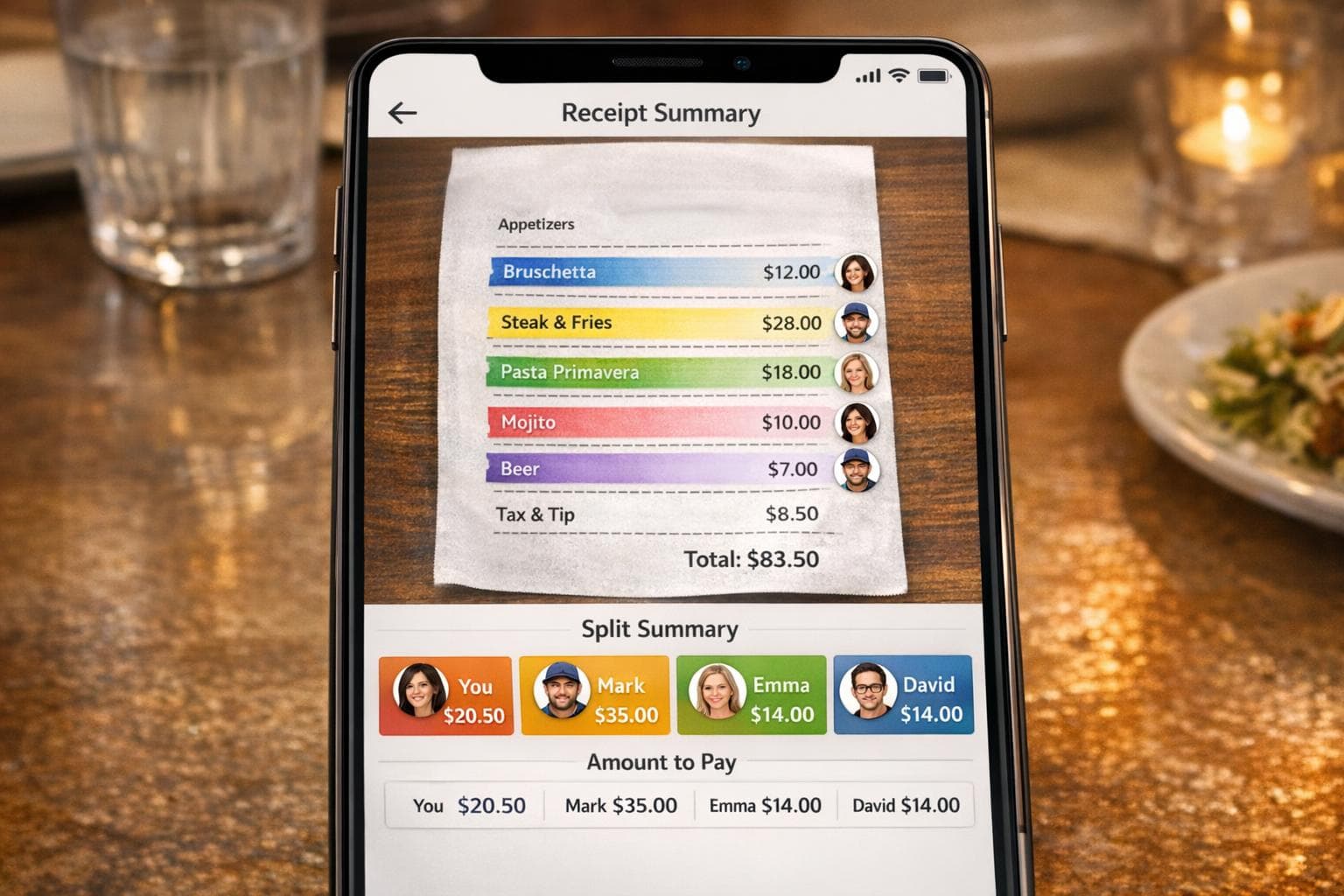
After recognition, users can assign products to individual participants or groups. The allocation interface can use visual markers to make the distribution of items clear and easy to review.
The application supports both individual purchases and shared items. For example, a dish can be assigned to one person, while a service charge can be distributed among the entire group.
Automatic calculation
Once all positions have been assigned, the application calculates each participant's share. The calculation may include personal items, shared products, drinks, service charges, tips and other common expenses.
Typical User Scenario
The user photographs a receipt or uploads an image from the gallery.
The system recognises product names, quantities and prices.
Participants are added to the calculation.
Receipt items are assigned to individual people or groups.
Shared items and service charges are distributed between participants.
The application calculates the final amount for every person.
The result can be shared with the group.
Example of a group calculation
Ten people are having dinner together. The food was ordered by different participants, alcohol was consumed by only part of the group, and the service charge should be divided between everyone. The application allows each element to be allocated separately.
| Participant | Assigned items | Individual result |
|---|---|---|
| Participant 1 | Meal, drink, shared charge | 35.00 |
| Participant 2 | Meal, dessert, shared charge | 28.50 |
| Participant 3 | Meal, alcohol, shared charge | 42.00 |
| Participant 4 | Shared charge | 8.50 |
Core Product Capabilities
Receipt photography and image upload.
OCR-based recognition of text and numerical values.
Recognition of product names, services and prices.
Colour-based visual marking of receipt positions.
Individual item assignment.
Allocation of products between selected groups.
Equal distribution between all participants.
Distribution of shared items and service charges.
Tips, discounts and rounding logic.
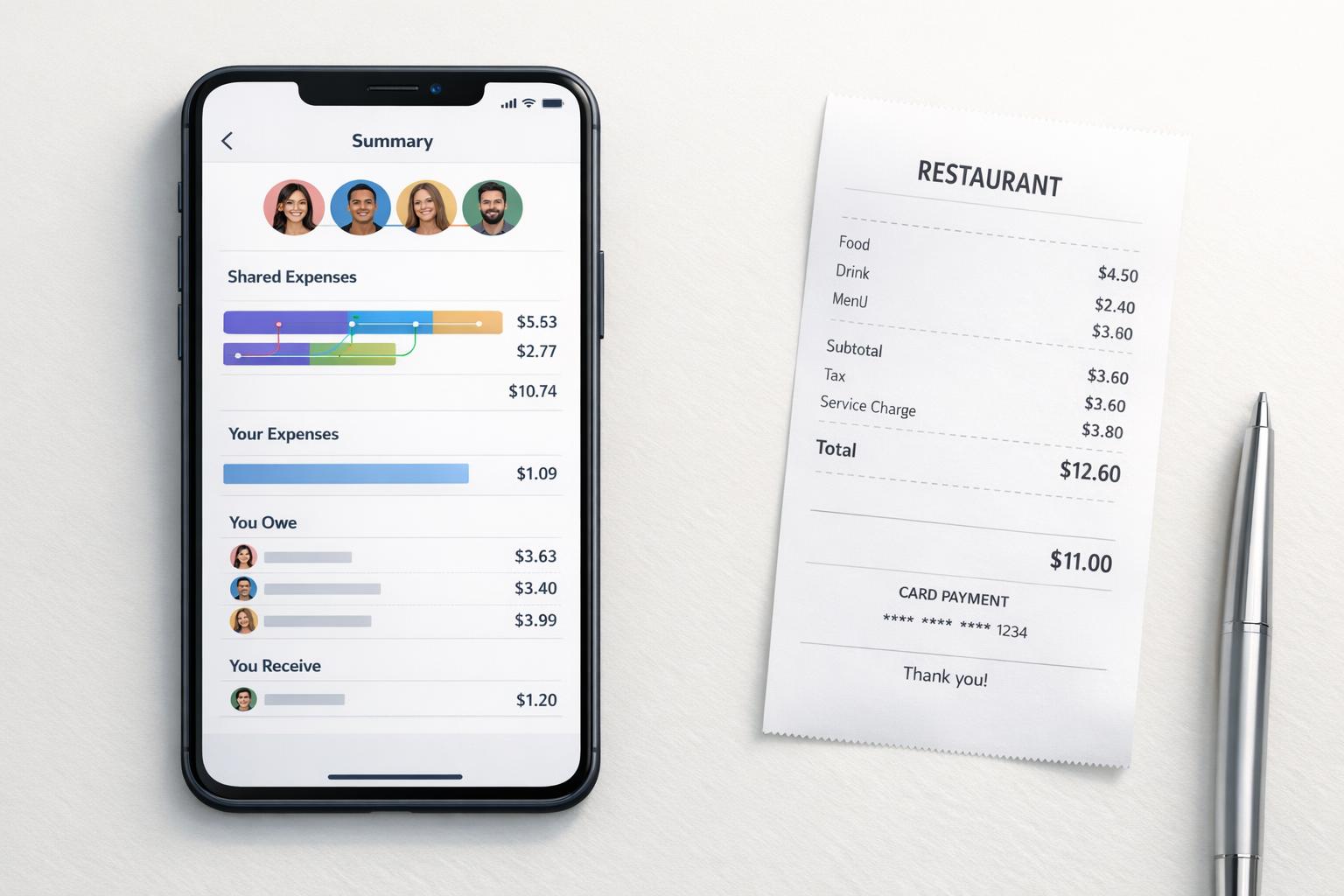
Final breakdown of individual amounts.
History of previous calculations.
Sharing results with other participants.
Technical Structure
The product concept includes mobile applications for iOS and Android supported by a backend platform and API layer.
iOS mobile application.
Android mobile application.
Backend services.
User authentication and account management.
Receipt image processing.
OCR service integration.
Calculation and allocation logic.
Database for users and saved calculations.
API for communication with mobile clients.
Sharing and notification mechanisms.
Target Audience
Groups of friends visiting restaurants and cafés.
Colleagues sharing lunch or business expenses.
Travellers and participants of group trips.
Event participants.
Small groups of retail customers.
Users who regularly divide shared expenses.
Business Value
The application reduces the time required to calculate a shared bill and helps avoid errors associated with manual calculations.
Its visual allocation model makes complex orders easier to understand, especially when different participants purchase different products or when some expenses are shared by the whole group.
This project is presented as a confidential NDA / White-label case study. Client information, commercial parameters, implementation details and proprietary materials are not disclosed publicly. The exact production status and scope of implemented functionality require confirmation.
Concept visuals
From receipt scan to individual shares.
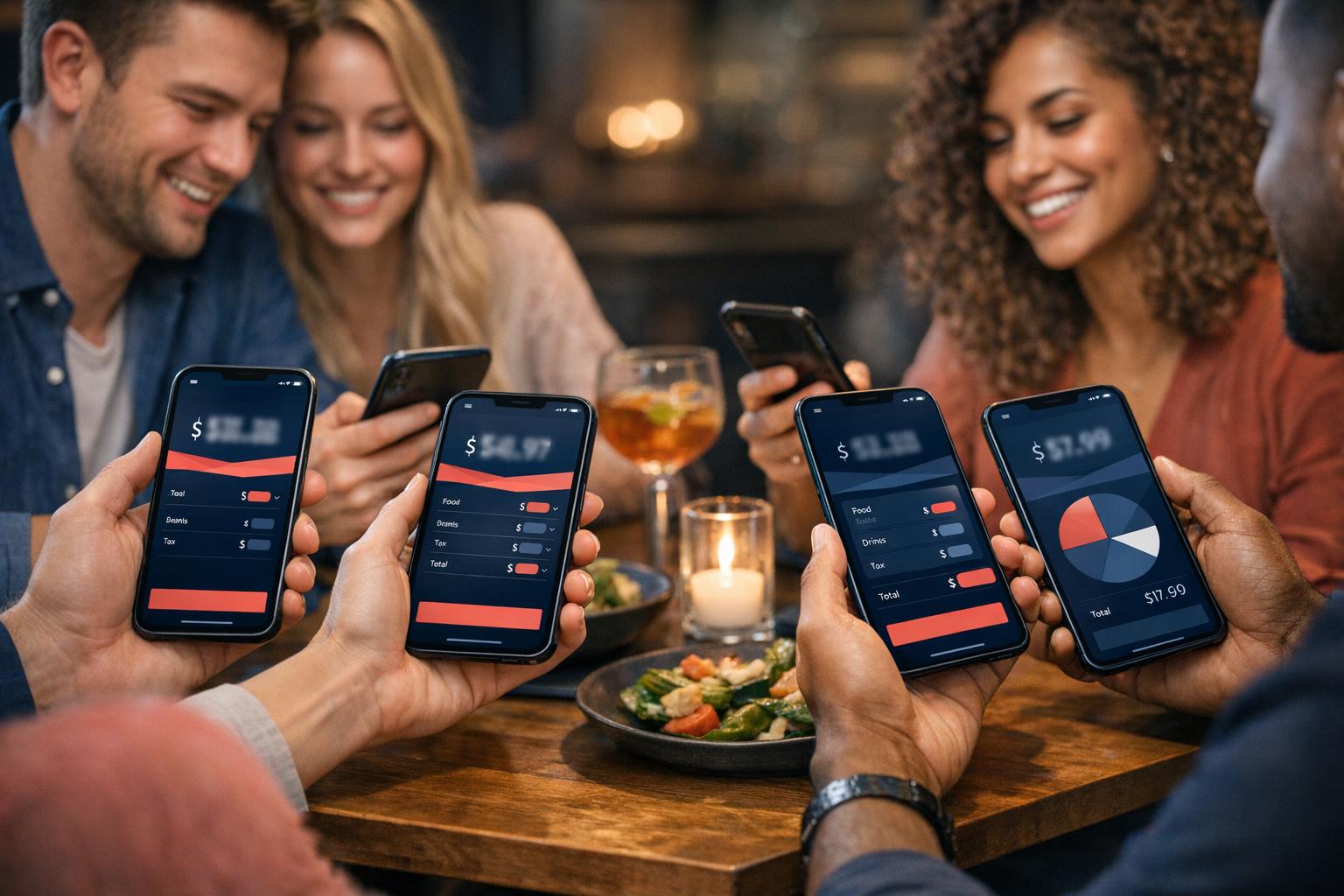
Conceptual illustrations of receipt scanning, item allocation, group coordination and expense summaries. These visuals describe the product direction rather than a verified production interface; example amounts are illustrative.

Planning a shared-expense product?
Let’s discuss receipt recognition, allocation workflows and mobile experiences for your users.