Business
From backlog to a usable workflow
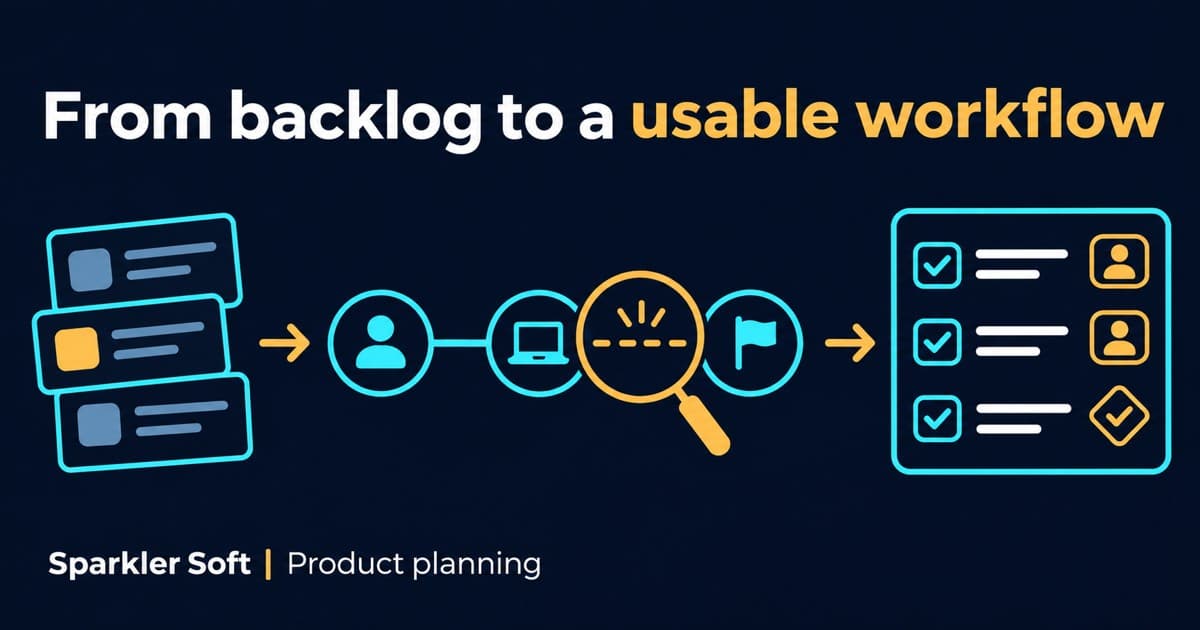
Walk through a complete user journey, inspect a failed integration and turn observations into requirements, owners and decisions before estimating development.
Sparkler Soft6 Nov 20263 min read
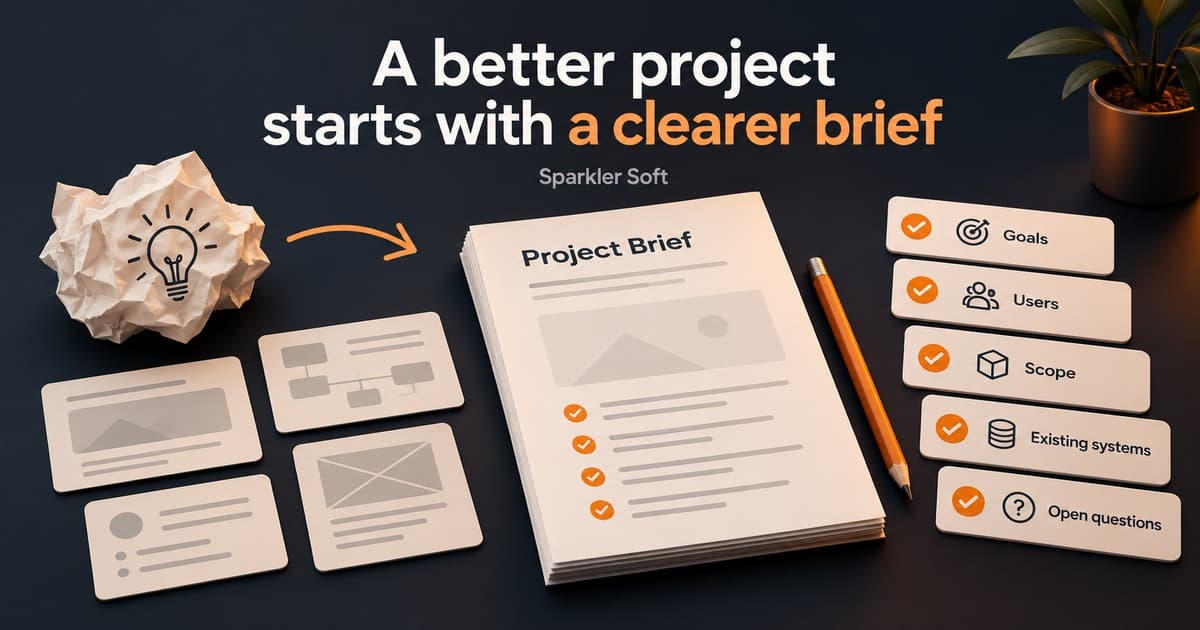
A useful software development brief explains the problem you want to solve, the people who will use the product and the constraints that could shape the work.
You do not need to document every screen before speaking with a development partner. You do need to make your priorities and uncertainties visible.
This guide covers what to prepare for an initial conversation, whether you are starting a new product or asking an outsourced team to work on an existing one.
Start with the reason for the project.
What is difficult today? Who experiences that difficulty? What should improve once the software is in use?
“Build a mobile app” leaves many questions unanswered. A more useful description might be:
“Customers currently call our team to book services. We want them to see availability and make a booking themselves.”
That gives a development partner something concrete to investigate. They can ask how availability is managed, what customers need to know before booking and which exceptions require staff involvement.
If you have a success measure, include it. It could relate to task completion, staff workload or adoption. Explain how you expect to measure it, and distinguish an intended outcome from a result you have already demonstrated.
Different users may need different parts of the product.
For example, a customer might make a booking, a staff member might manage availability and an administrator might control access.
For each group, describe:
You do not need detailed personas to begin. A short description of each user group and its main tasks is often enough for an initial discussion.
A feature list gives an overview. A user journey explains how the features fit together.
Choose the most important tasks and describe them from start to finish.
For a booking journey, you might explain how a customer:
Include the important exceptions. What happens if the selected time is no longer available? Can a customer book without an account? Does a staff member need to approve the request?
You can leave questions unanswered. Label them as open questions rather than allowing them to become hidden assumptions.
An existing product changes the starting point.
List any assets and systems that may be relevant:
For an initial conversation, a high-level inventory may be sufficient. Detailed access can be arranged later.
Keep passwords, tokens, production data and other sensitive material out of the brief. If information is confidential, identify what is available and arrange appropriate sharing before providing it.
A long-term product vision and a first-release scope serve different purposes.
Explain both, but separate them.
A simple way to organise requirements is:
For each required item, explain why it is essential. This helps a development partner understand where scope can be adjusted and where it cannot.
Avoid describing everything as a launch requirement. If priorities compete, state which user journey or business objective takes precedence.
Constraints can affect the proposed scope, team and delivery approach.
Include what you know about:
If you have a deadline, explain its reason. A date linked to a contractual commitment creates different planning conditions from a preferred launch date.
If you have a budget range, share it where appropriate. It helps the discussion focus on a feasible scope.
Also name external dependencies. For example, a required integration may depend on documentation or test access supplied by another organisation.
An outsourced team needs to know who can answer questions and approve changes.
Identify:
Explain how conflicting feedback will be resolved. A clear decision process helps the team avoid implementing incompatible instructions.
An incomplete brief can still be useful if its gaps are clear.
Create a short list of open questions. For example:
These questions may require a discussion, a technical review or a discovery phase before a reliable implementation plan can be prepared.
Ask the development partner which uncertainties matter most and what would be needed to resolve them.
The following example is fictional. It is included to demonstrate how to structure a brief and does not describe a client project.
Initial request
“We need an iOS and Android app for booking services. It should include accounts, payments, notifications and an administration panel.”
This names several features, but leaves the purpose, priorities and dependencies unclear.
A more useful starting brief
The second version gives both sides a clearer basis for discussion. It does not settle every decision, but makes the unresolved ones explicit.
Once you have shared your brief, ask:
At an early stage, an estimate may depend on assumptions that still need validation. Ask for those assumptions to be documented so you can understand the conditions behind the proposal.
Before your first conversation, check that you can share:
A short, clear brief is enough to begin a productive discussion. More detail can be developed as the important questions are resolved.
Planning a new product or extending an existing one?
Book a free 15-minute introductory call with Sparkler Soft to discuss your goals, constraints and open questions.
Book a free 15-minute introductory call ↗Sparkler Soft
Company editorial
Practical guidance on software project planning and working with a development partner.
LinkedIn →Walk through a complete user journey, inspect a failed integration and turn observations into requirements, owners and decisions before estimating development.
Tell us about your project — we'll tell you honestly whether we can help.